

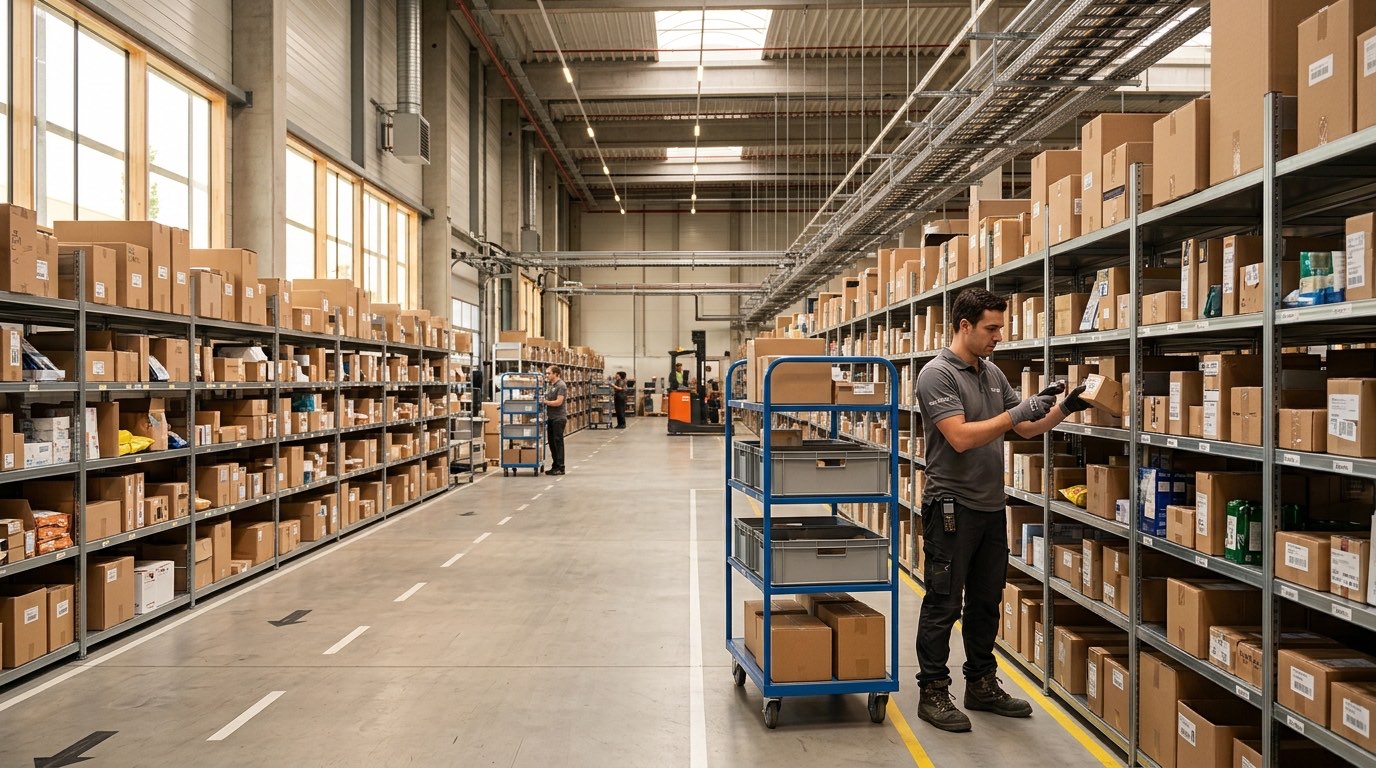
Saudi Arabia's ecommerce market is booming — Vision 2030, high smartphone penetration and a young, connected population have made online retail one of the Kingdom's fastest-growing sectors. But every online order is a physical promise: the right product, packed correctly, delivered fast, and easy to return. Ecommerce fulfillment in Saudi Arabia is the operation that keeps that promise — and for growing merchants, it's often the difference between scaling smoothly and drowning in their own success.
We're BAFCO International — 30 years of warehousing, distribution and logistics across Jeddah, Riyadh and Dammam, with owned facilities and in-house customs. This guide explains how ecommerce fulfillment works in the Kingdom, and how to choose the right model.
Talk to BAFCO about ecommerce fulfillment — storage to doorstep, one chain.
What is ecommerce fulfillment in Saudi Arabia?
Ecommerce fulfillment is everything that happens after a customer clicks "buy": storing your inventory, picking the ordered items, packing them, shipping them to the customer, and handling any return. Done well it's invisible; done badly it shows up as late deliveries, wrong items, and one-star reviews. As order volumes grow, doing this from a back room stops working — which is when merchants turn to a 3PL fulfillment partner who does it at scale.
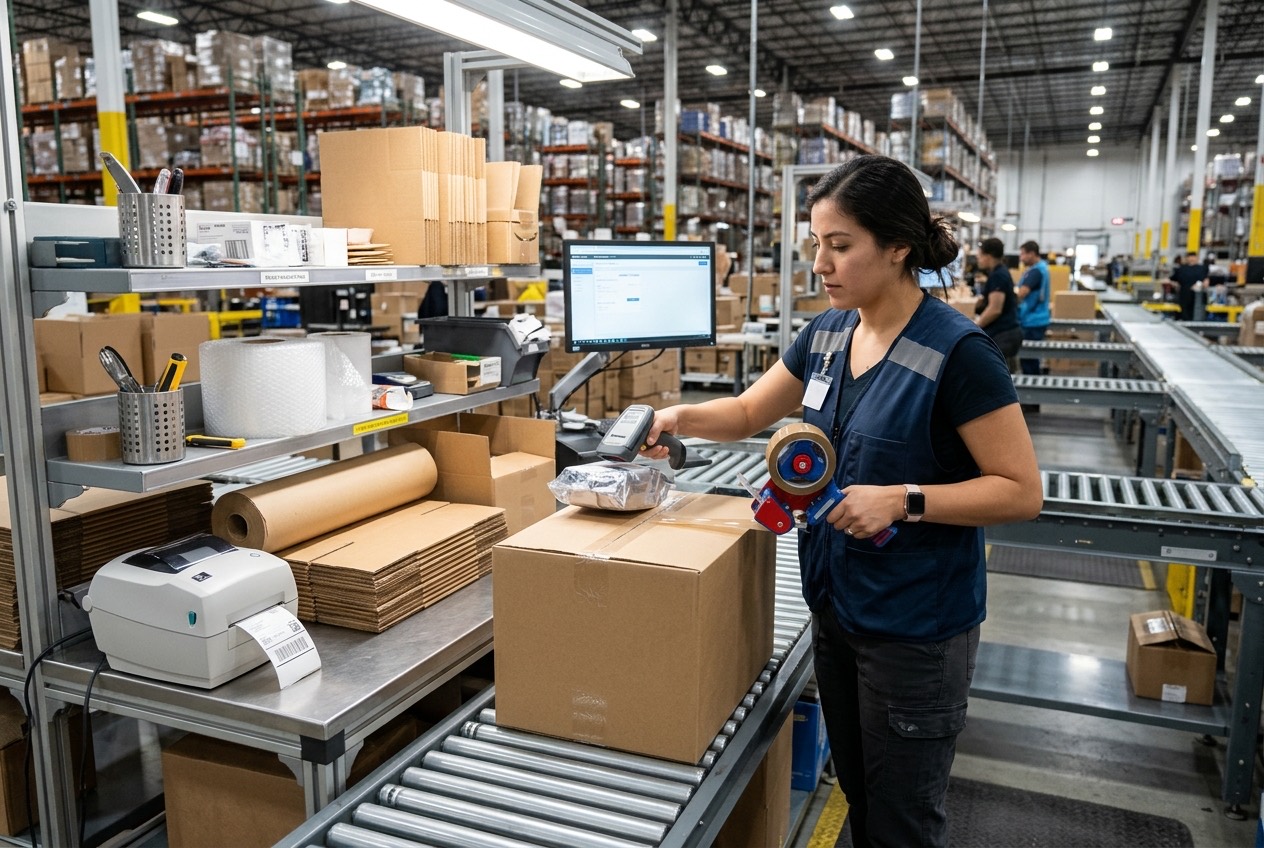
The fulfillment process, step by step
- Receiving (inbound) — your stock arrives at the fulfillment centre, is checked and logged into the system.
- Storage — inventory is stored and tracked, each SKU with a known location.
- Picking — when an order comes in, the items are picked from the shelves.
- Packing — items are packed securely and appropriately for the product and courier.
- Shipping — the order is dispatched via the right delivery service for its destination and speed.
- Returns (reverse logistics) — returned items are received, inspected and restocked or processed.
The magic is in doing this accurately, fast, and at scale — which needs a real warehouse management system, not a spreadsheet.
3PL fulfillment vs doing it in-house
Handling fulfillment yourself gives control but consumes what a growing store can least spare: space, staff, systems and time. Outsourcing to a third-party logistics (3PL) partner converts those fixed costs to variable, taps an existing warehouse, workforce and delivery network, and lets you scale up for peaks (and down after) without hiring or leasing. For most merchants past the early stage, 3PL fulfillment frees them to focus on product and marketing while the logistics runs in the background. See our best 3PL companies in Saudi Arabia guide.
Last-mile delivery — the make-or-break leg
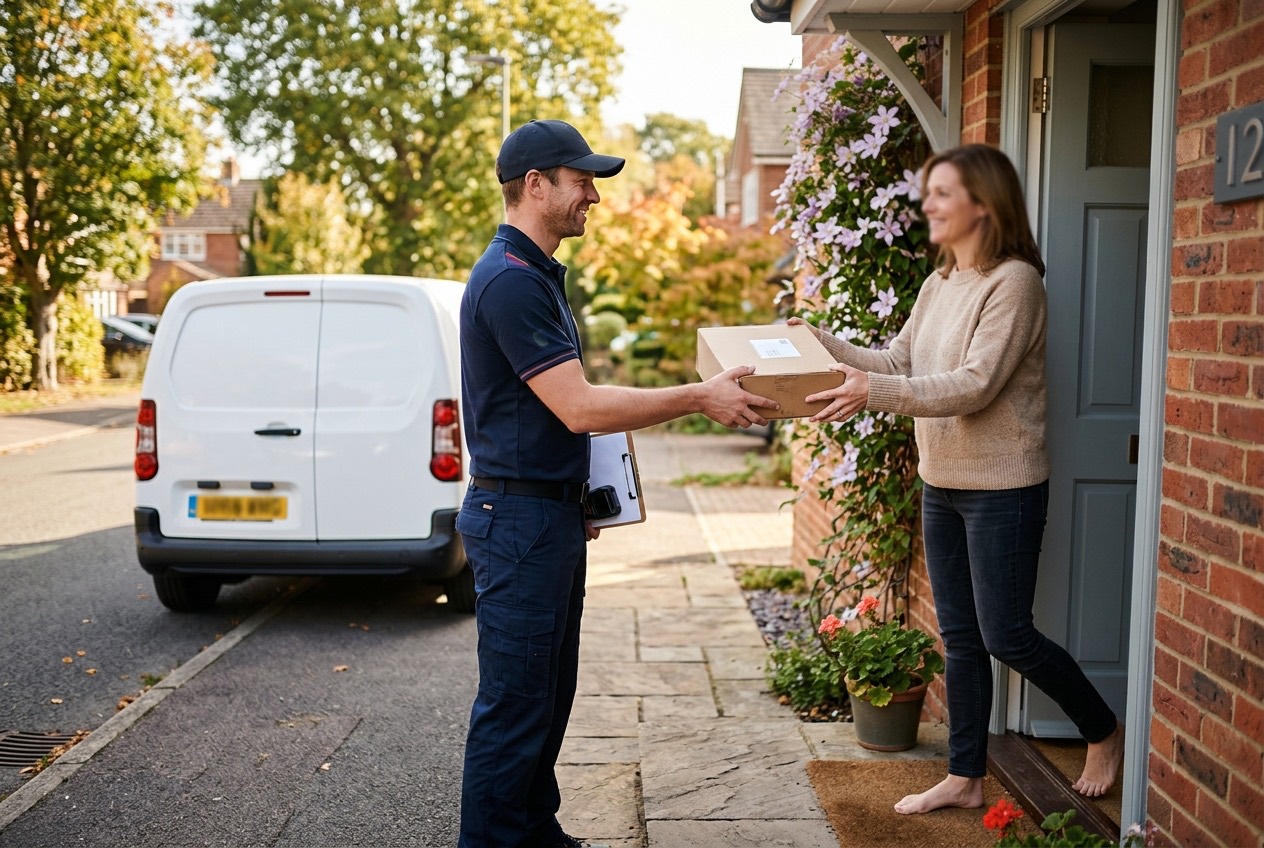
In ecommerce, the customer only sees the last mile — the final delivery to their door. It's the most visible, most expensive and most failure-prone part of the chain, and in Saudi Arabia it must reach a wide, spread-out geography quickly to meet rising expectations. Fast, reliable last-mile across Jeddah, Riyadh, Dammam and beyond is what turns a one-time buyer into a repeat customer, which is why it's central to any serious fulfillment operation.
Cash on Delivery — a Saudi-specific reality
Here's something global fulfillment guides miss: Cash on Delivery (COD) remains hugely popular in Saudi Arabia, with many shoppers still preferring to pay when the order arrives. That has real operational implications — cash handling and reconciliation, higher return/refusal rates on COD orders, and the need for delivery partners set up to collect payment. A fulfillment operation built for the Saudi market handles COD smoothly; one designed only for prepaid, card-first markets struggles with it.
Returns management (reverse logistics)
Returns are a fact of ecommerce life, and how you handle them shapes customer loyalty. A good fulfillment operation makes returns easy for the customer and efficient for you: receiving the item, inspecting it, and either restocking sellable goods quickly or routing them appropriately. Combined with COD refusals, returns volume in the region can be significant, so reverse logistics isn't an afterthought — it's a core part of the service.
The inbound side: getting your stock into the country
This is where a forwarder-backed fulfillment partner has an edge over a pure fulfillment house. Before you can fulfill orders, your inventory has to arrive and clear customs — often imported from China or elsewhere, needing SABER conformity, HS classification and clearance, plus customs duty and 15% VAT on the landed value. A partner who handles freight and customs and fulfillment joins the whole chain — from your supplier's factory to your customer's door — instead of picking up only at the warehouse gate. That's one accountable chain rather than three vendors.
Technology and visibility
Modern fulfillment runs on software: a Warehouse Management System (WMS) for real-time inventory accuracy, integration with your ecommerce platform (so orders flow automatically), and tracking that lets you and your customer see where an order is. Without this, you can't scale — inventory drifts, orders slip, and you're managing by guesswork. Visibility over stock and orders is what makes fulfillment reliable at volume.
How to choose a fulfillment partner
Look for nationwide reach (Jeddah, Riyadh, Dammam and beyond); COD capability built for the Saudi market; strong last-mile and returns; a real WMS with platform integration; the ability to handle your inbound import and customs, not just storage; and scalability for peak seasons. An asset-backed partner who owns the warehousing and joins it to freight and customs gives you the most control and the fewest hand-offs.
Peak seasons: Ramadan, White Friday and sales events
Ecommerce demand in Saudi Arabia isn't flat — it spikes hard around key events. Ramadan and Eid, the White Friday (regional Black Friday) sales, and other seasonal peaks can multiply order volumes in a matter of days. A fulfillment operation has to scale up fast for these surges and back down afterward, without you having to hire, lease or scramble. This elastic capacity is one of the biggest reasons growing merchants outsource: a good 3PL absorbs the peak on infrastructure and staff you don't have to carry the rest of the year.
Meeting same-day and next-day expectations
Saudi shoppers increasingly expect fast delivery — same-day or next-day in the major cities — and slow fulfillment now costs sales directly. Meeting that bar depends on two things: inventory positioned close to customers (stock in Riyadh, Jeddah and Dammam rather than one central point), and a slick pick-pack-ship operation that gets orders out the door quickly. Distributed warehousing and efficient fulfillment aren't luxuries for a serious online store in 2026 — they're the price of competing.
Multi-channel fulfillment
Many merchants no longer sell on just one channel — they run their own website and sell on marketplaces, and perhaps supply retail too. Good fulfillment handles all of it from one pool of inventory, so you're not splitting stock (and risking overselling) across channels. Integrating your website, marketplace and any B2B orders into a single fulfillment operation keeps inventory accurate and dispatch consistent no matter where the order came from.
Common fulfillment mistakes
The pitfalls that trip up growing stores are consistent: running fulfillment in-house too long until it caps growth; poor inventory accuracy that causes overselling and stock-outs; weak returns handling that frustrates customers; ignoring COD operationally; and choosing a partner who can't scale for peaks. Each is avoidable with the right model and partner — and each, left unaddressed, quietly caps how big the business can get.
Fulfillment is part of your brand
To your customer, the delivery is the brand experience — the box that arrives, the speed, the condition, the ease of returning. A great product with a poor fulfillment experience still generates bad reviews and lost repeat business. Treating fulfillment as a core part of the customer experience, not a back-office cost, is what separates stores that scale from stores that stall. The right partner protects that experience at volume, so growth doesn't come at the cost of service.
Value-added services that lift the customer experience
Fulfillment is more than pick-and-pack. The value-added services a good 3PL offers can genuinely differentiate your store: custom or branded packaging that makes the unboxing feel premium; kitting and bundling for gift sets or subscription boxes; inserts and promotional materials in each order; quality checks before dispatch; and gift wrapping or personalisation. These touches, handled at the fulfillment stage, turn a functional delivery into a brand moment — without you handling a single parcel yourself. When comparing partners, ask which of these they can do, because they're often what lets a smaller store punch above its weight.
Scaling with your growth
The right fulfillment partner grows with you rather than becoming a ceiling. Early on you might need simple storage and dispatch; as you scale you'll want distributed inventory, faster delivery tiers, deeper platform integration and richer reporting. A partner with the infrastructure and systems to add these as you need them means you never have to rip out and replace your logistics mid-growth — the operation flexes up as the business does, which is exactly what an asset-backed 3PL is built to do.
How ecommerce fulfillment is priced
One thing most guides skip is how you actually pay for fulfillment. A 3PL quote is built from a few itemised components rather than one flat fee: inbound/receiving (handling stock in and putting it away), storage (per pallet, shelf or bin, per month), pick and pack (usually per order plus a small charge per extra item), packaging materials, shipping and last-mile (by weight, size and destination), and returns handling. On top sit any monthly minimums and value-added extras. The practical takeaway: compare fulfillment partners on the itemised total for your real order profile — average basket size, order volume, SKU count and return rate — not on a single headline number. Rates vary with volume, storage type and service level, so treat any figure as indicative and ask for a quote built on your actual numbers.
Service levels and accuracy: the KPIs that matter
Fulfillment is only as good as the numbers behind it, so agree the KPIs up front. The ones that decide customer experience are order accuracy (the right items, every time), the same-day dispatch cut-off (how late an order can arrive and still ship today), on-time delivery rate, inventory accuracy (system stock matching the shelf), and returns turnaround. A serious partner reports these and commits to service levels rather than leaving them vague. When you're comparing providers, ask what they measure and what they'll guarantee — the answer tells you whether fulfillment is run as an operation or left to chance.
Cross-border and GCC fulfillment
Many Saudi merchants don't stop at the border — they sell into the wider GCC, or supply Saudi customers from regional stock. That adds a layer: customs between GCC states, differing documentation, and the choice of whether to hold inventory in the Kingdom or ship cross-border per order. A fulfillment partner that also runs freight, customs and cross-border land transport can position stock in the right country, clear it correctly, and fulfill across borders on one chain — rather than handing you off to separate freight and customs vendors. For a growing store expanding across the Gulf, that joined-up capability is the difference between smooth regional growth and a tangle of hand-offs.
Preparing for a fulfillment handover
Moving to a 3PL is smoothest when the groundwork is done. Before the first stock arrives, the partner needs clean SKU data (dimensions, weights, barcodes), a plan for barcoding or labelling any un-barcoded items (including Arabic labelling where required), and an integration between your ecommerce platform and their warehouse system so orders and stock levels sync automatically. A well-run onboarding — receiving the first inventory, reconciling counts, and testing a few live orders before going fully live — prevents the early errors that sour a fulfillment switch. Ask a prospective partner how they onboard; a clear, staged process is a good sign. It's also worth agreeing up front how stock discrepancies found at goods-in are recorded and resolved, and how the first month's invoicing works, so both sides start from the same expectations rather than reconciling surprises later.
Why BAFCO for ecommerce fulfillment in Saudi Arabia
BAFCO joins the whole chain: importing and clearing your stock, storing it in owned warehousing, and fulfilling orders with distribution across Jeddah, Riyadh and Dammam — one accountable partner from your supplier to your customer, backed by 30 years and in-house customs. Compare us in our best 3PL companies in Saudi Arabia guide.
Frequently asked questions
What is ecommerce fulfillment?
Everything that happens after a customer places an order — storing inventory, picking and packing the items, shipping to the customer, and handling returns — usually run by a 3PL fulfillment partner as order volumes grow beyond what a merchant can handle in-house.
What is 3PL fulfillment?
Third-party logistics fulfillment is outsourcing your storage, order processing, shipping and returns to a specialist who runs it at scale using their warehouse, workforce, delivery network and systems — converting fixed logistics costs to variable ones.
Is Cash on Delivery important for ecommerce in Saudi Arabia?
Yes — COD remains very popular in Saudi Arabia, so a fulfillment operation needs cash handling and reconciliation, delivery partners set up to collect payment, and the ability to manage the higher return/refusal rates that come with COD orders.
How does last-mile delivery work in Saudi Arabia?
Last-mile is the final delivery to the customer's door across the Kingdom's spread-out geography. Fast, reliable last-mile across Jeddah, Riyadh, Dammam and beyond is central to fulfillment, as it's the most visible part of the customer experience.
Should I use a fulfillment partner that also handles importing?
It's a real advantage — a partner who handles freight and customs as well as fulfillment joins the whole chain from your supplier to your customer, so your stock is imported, cleared, stored and shipped by one accountable team instead of several.
Related reads
- Best 3PL Companies in Saudi Arabia
- Warehousing & Distribution Services in Saudi Arabia
- Supply Chain Solutions in Saudi Arabia (2026)
- How to Import Goods into Saudi Arabia (2026)
- Warehousing Cost in Saudi Arabia (2026)
- Guide to Freight Forwarding Services in Saudi Arabia
Scaling your online store? Let BAFCO fulfill it
Tell us your products, volumes and where your customers are — we'll import and clear your stock, store it, and fulfill orders with fast last-mile and COD across Saudi Arabia, all on one chain. That's ecommerce fulfillment in Saudi Arabia handled end to end by one accountable partner.
📞 +966 12 642 0333 · 📧 inquiry@bafcointl.com · 📦 Talk to BAFCO about fulfillment
📍 Jeddah HQ · Branches in Riyadh, Dammam & Jubail
