

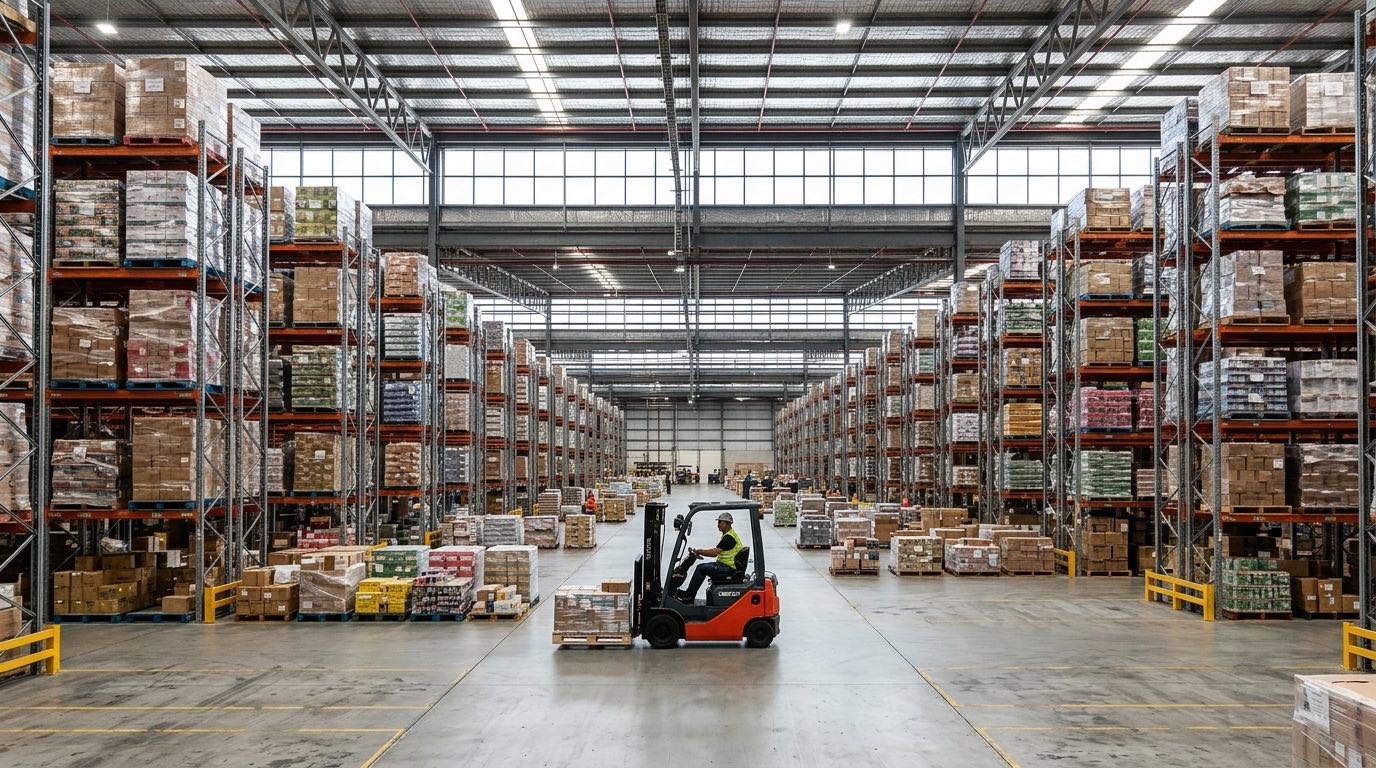
"How much does warehousing cost?" is the question every importer and online seller asks, and the one most providers dodge with "it depends." It does depend — but that's no excuse for a black box. The good news is that Saudi warehousing pricing has matured into clear, activity-based models, so you can understand what you'll pay and why. This guide gives you the real warehousing cost in Saudi Arabia for 2026: the pricing models, indicative SAR rates, and what actually moves the number.
We're BAFCO International — 30 years of warehousing and distribution across Jeddah, Riyadh and Dammam, with owned facilities. Here's how warehousing is priced, transparently.
Get a warehousing quote from BAFCO — itemised, no black box.
The three ways warehousing is priced
Saudi warehousing is quoted on one of three models, and knowing which fits your cargo is the first step to understanding the cost:
- Per pallet position, per month — the most common for palletised goods; you pay for each pallet space you occupy.
- Per square metre, per month — common for bulk floor storage or non-palletised goods.
- Per cubic metre (CBM), per month — used where cargo is measured by volume.
The market has largely moved from "all-in" flat rates to transparent, activity-based pricing — storage priced one way, and handling and value-added services itemised separately.
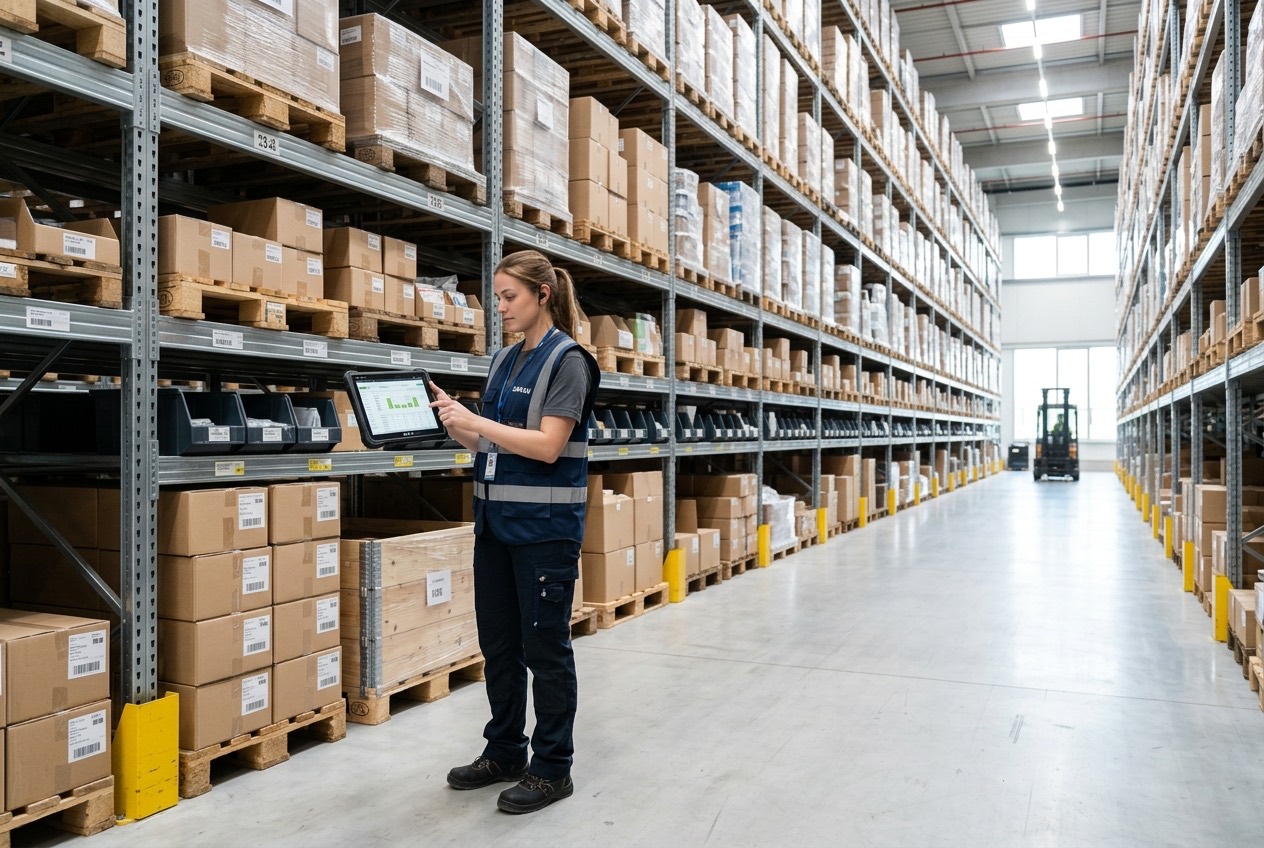
Indicative 2026 rates (in SAR)
Real, current market ranges to anchor your expectations:
| Storage type | Indicative rate |
|---|---|
| Dry pallet storage (Riyadh) | ~SAR 45–55 per pallet / month |
| Pallet storage (broader range, by type/location) | ~SAR 80–250 per pallet / month |
| Refrigerated / SFDA cold storage | ~SAR 80–95 per pallet / month |
| Floor space (Riyadh industrial zones) | ~SAR 15–45 per sqm / month |
Cold storage carries a clear premium over ambient — reflecting the energy cost of maintaining a cold chain in a desert climate. (Indicative — ask BAFCO for a live quote for your exact profile.)
What drives the cost
Five factors move your warehousing number up or down:
- Storage type — ambient is cheapest; temperature-controlled, bonded and hazardous storage cost more.
- Location — proximity to ports (Jeddah) or the biggest consumption market (Riyadh) affects price and convenience.
- Volume and duration — larger, longer commitments usually earn better rates.
- Handling activity — how often goods move in and out; high-turnover e-commerce stock costs more to handle than static bulk.
- Value-added services — labelling, kitting, repacking, quality checks add to the base.
The full cost breakdown — beyond storage
Storage is only one line. A complete warehousing quote also includes:
- Inbound handling — receiving, checking and putting away goods.
- Outbound handling — picking, packing and loading.
- In/out and cross-dock charges — movement fees.
- Value-added services — labelling, kitting, repacking, inspection.
- Minimum terms or volume commitments.
This is why a single "per pallet" number can mislead: two quotes at the same storage rate can differ substantially once handling and activity are counted. The right comparison is the itemised total for your actual pattern of movement, not the headline storage rate.
Bonded and cold storage — the cost trade-offs
Two specialist options change the cost equation. Bonded storage costs a little more to administer, but it defers customs duty and 15% VAT until goods enter the local market — so the cash-flow saving can far outweigh the extra storage cost for goods you hold or re-export. Cold storage costs meaningfully more per pallet (see the rates above), but for temperature-sensitive goods it isn't optional. In both cases, the "more expensive" storage is often the cheaper business decision once you account for what it protects or saves.
Hidden costs to watch
The surprises that inflate a warehousing bill are almost always in the activity, not the storage:
- High handling on fast-moving stock — every pick and pack is a charge.
- Minimum terms — paying for space or service levels you don't use.
- Accessorial/value-added creep — small per-item fees that add up at volume.
- Demurrage upstream — if clearance is slow and goods sit at the port before they even reach the warehouse.
Ask for the full fee schedule up front, and model it against your real monthly movement.
Own warehouse vs 3PL — the cost comparison
Running your own warehouse means fixed costs — lease, staff, equipment, systems, utilities — regardless of how full it is. A 3PL converts that to variable cost: you pay for the space and activity you actually use, scale up for peaks and down after, and tap existing infrastructure and systems. For most importers and online sellers, especially with seasonal or growing volumes, 3PL warehousing is more cost-efficient than carrying a fixed facility — and it frees capital for the core business.
How to get an accurate quote
Give the provider the inputs that actually price the job: what you're storing (product, dimensions, temperature needs), how much (pallets/sqm/CBM), how long, how often it moves (inbound/outbound frequency), and any value-added services. With those, a good operator returns an itemised quote you can trust — not a vague "it depends."
How to reduce your warehousing cost in Saudi Arabia
Warehousing spend is more controllable than most businesses realise. The biggest levers: right-size your storage — don't pay for pallet positions you don't fill; improve inventory turns so stock doesn't sit idle racking up storage months; consolidate slow-moving SKUs into denser storage; match the storage type to the need (don't pay cold-storage rates for ambient-safe goods); and negotiate on volume and term where your profile is stable. An operator who prices transparently, activity by activity, actually makes these savings visible — you can see exactly what each part costs and act on it.
Warehousing cost in Saudi Arabia by city: Jeddah, Riyadh and Dammam
Location shapes both price and value. Riyadh — the largest consumption market — is where most distribution demand sits, with industrial-zone rates reflecting that; it's the natural hub for national distribution. Jeddah — the main import gateway — suits stock landing by sea that you want to hold near the port before onward movement. Dammam serves the Eastern Province, industrial and energy sectors. The cheapest headline rate in one city isn't automatically the best value: the right question is total cost including the transport to your customers, which is why proximity to your demand often beats a marginally lower storage rate far away.
Short-term vs long-term storage
Not all storage needs are the same. Short-term storage — staging goods between arrival and distribution, or holding seasonal stock briefly — is best served flexibly, often at a slightly higher per-unit rate for the convenience. Long-term storage rewards commitment with better rates. Knowing which you need helps you buy the right way: flexible capacity for spiky, unpredictable needs, and committed space for steady baseline volume. Many businesses use a blend — a committed core plus flexible overflow for peaks.
Storage plus fulfilment: the combined view
If you're an online seller, don't look at storage cost in isolation. What matters is the combined cost of storing and fulfilling — storage plus picking, packing, shipping and returns. A slightly higher storage rate at a partner who fulfils efficiently and cheaply can beat a low storage rate that comes with expensive or clumsy fulfilment. Look at the whole cost-to-serve per order, not just the rent on the shelf.
Why transparent, activity-based pricing matters
The shift in Saudi warehousing from flat "all-in" rates to activity-based pricing is good news for buyers — but only if the provider is genuinely transparent. Activity-based means you pay for what you actually use: storage for the space you occupy, handling for the movements you make, value-added services for the extras you request. The benefit is that costs align with usage and you can optimise them; the risk is a provider who itemises opaquely and lets small fees creep. The fix is simple: insist on the full fee schedule up front, and model it against your real monthly pattern before you sign. A reputable operator welcomes that scrutiny.
Value-added services — and what they add to the bill
Beyond storage and basic handling, most operators offer value-added services (VAS) priced per activity: labelling and re-labelling (including Arabic labelling for the Saudi market), kitting and bundling, repacking, quality inspection, stock counts, and returns processing. Each is useful, and each adds to the bill — so the key is knowing which you actually need and seeing them itemised. VAS is where an opaque quote quietly inflates: a low storage rate paired with rich, frequently-used value-added services can total more than a higher storage rate with fewer extras. Model your real activity, not just the storage line, to compare providers fairly.
Setup costs, deposits and minimum terms
Beyond the monthly rates, factor in the one-off and commitment costs that a headline quote can leave out. Expect a possible setup or onboarding fee (system configuration, initial goods-in, SKU setup), sometimes a security deposit or advance, and a minimum monthly commitment or minimum storage volume that you pay whether or not you fill it. Contracts also carry a term and notice period — important if your volumes are seasonal or uncertain. None of this is unusual, but it belongs in your comparison: two providers with identical per-pallet rates can differ once setup, minimums and term are counted. Ask for these up front so the first invoice holds no surprises.
A worked example: estimating your monthly warehousing cost in Saudi Arabia
To make the numbers concrete, take an illustrative importer holding 100 pallets of dry goods in Riyadh with moderate movement. Using the indicative dry-pallet rate above (~SAR 45–55 per pallet per month), the storage line alone lands around SAR 4,500–5,500 a month. On top of that sit inbound handling (receiving and putting away the pallets that arrive), outbound handling (picking and packing what ships that month), any value-added services such as labelling, and then 15% VAT on the total. The storage figure is the easy part; what actually decides the monthly bill is how often the stock moves — a slow-moving 100 pallets costs far less to run than 100 fast-turning ones. That's exactly why the itemised quote for your real movement pattern, not the per-pallet headline, is the number to compare. (All figures indicative — ask BAFCO for a live quote for your exact profile.)
Cold-chain and SFDA cold storage: what the premium buys
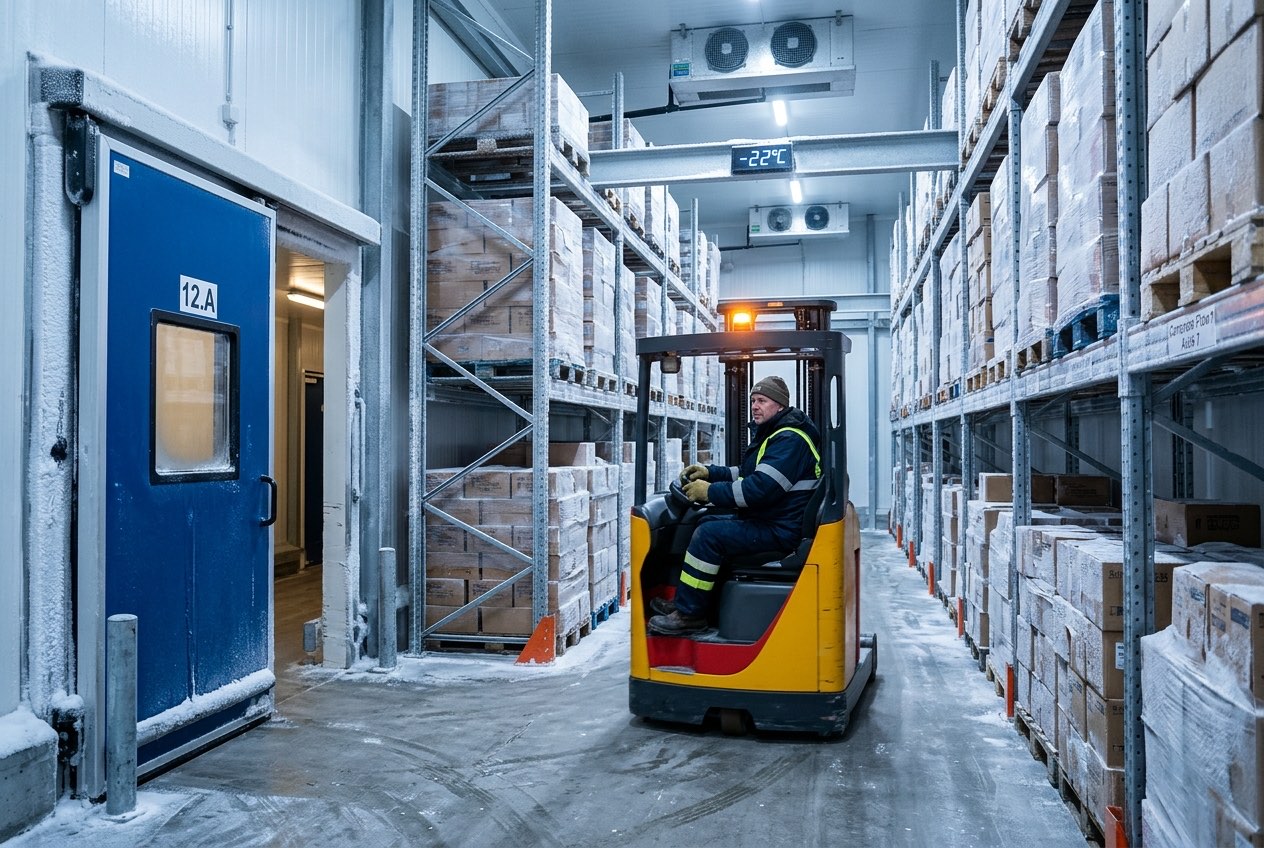
Temperature-controlled storage costs meaningfully more per pallet than ambient (see the rates above), and it's worth understanding why before you balk at the number. The premium pays for continuous refrigeration in a desert climate, backup power, tighter monitoring, and the SFDA compliance required for food, pharmaceuticals and other regulated temperature-sensitive goods. For those products it isn't optional — a broken cold chain means spoiled or non-compliant stock, a loss far larger than the storage saving. The cost lever here isn't skipping cold storage; it's matching the temperature zone to the goods (chilled vs frozen vs ambient) and not paying cold-chain rates for products that don't need them. An operator running mixed zones can place each SKU in the right (and cheapest suitable) environment.
How Saudi warehousing costs are trending in 2026
Warehousing demand in the Kingdom is rising with Vision 2030 — ecommerce growth, localisation of supply chains and the push to make Saudi Arabia a regional logistics hub are all pulling more goods into storage. At the same time, significant new capacity is coming online in the logistics zones around Riyadh, Jeddah and Dammam, which tempers rate pressure even as demand grows. For buyers, the practical implications are twofold: rates for standard dry storage remain competitive where supply is ample, while specialised space (cold-chain, bonded, hazardous) stays at a premium because it's scarcer. Locking in terms for specialised storage ahead of a peak, and staying flexible on commodity dry space, is a sensible way to manage cost in a growing market.
Reading a warehousing quote line by line
When a quote arrives, read it the way it will actually bill you. Check the storage basis (per pallet, per sqm or per CBM, and per what period) and whether the rate assumes a standard pallet height — oversized or double-stacked loads can be charged differently. Look at handling: is it a single in/out fee, or separate inbound and outbound charges, and is picking priced per order or per line? Scan for accessorials — cross-dock, relabelling, stock counts, special handling — and for minimums that apply whether or not you use them. Confirm whether 15% VAT is shown or added, and whether insurance of the stored goods is included or your responsibility. The single comparison that matters is the itemised monthly total modelled on your real movement, because two quotes with the same headline storage rate can land far apart once handling and accessorials are counted.
Questions to ask before you sign a warehousing contract
A short checklist keeps you from signing a number you don't fully understand. Ask: What exactly is the storage basis, and how is a part-used pallet or sqm charged? Are handling and value-added services fully itemised? Is there a minimum term or minimum volume, and what's the notice period to exit or scale down? How often is stock counted, and how are discrepancies handled? Is bonded or cold/SFDA storage available on the same site if you need it later? Who insures the goods while stored? And how quickly can the operator scale up for a Ramadan or White Friday peak, and back down afterward? Clear answers to these separate a transparent operator from one whose quote looks cheap until the extras arrive.
Cost of specialised storage: hazardous, bonded and oversized
Standard pallet and floor rates cover ordinary goods, but specialised cargo is priced differently. Hazardous / dangerous-goods storage carries a premium for the segregated, compliant space and safety measures it requires. Bonded storage adds a modest administration cost but defers duty and VAT (as covered above), often paying for itself in cash flow. Oversized or heavy items that won't sit in a standard pallet position — machinery, long or awkward loads — are usually charged by the floor area or volume they occupy, sometimes with a handling surcharge for the equipment needed to move them. If any of your stock falls into these categories, ask how it's priced specifically rather than assuming the standard pallet rate applies, because the difference can be significant and is easy to miss in a headline quote.
Location within a city: port-side vs inland cost trade-offs
Where a warehouse sits within a city shapes both its rate and your total cost. Port-adjacent space in Jeddah or Dammam commands a premium but cuts drayage and demurrage risk for stock landing by sea — valuable if you import heavily and want to move goods straight from quay to shelf. Inland or outskirts facilities are typically cheaper per pallet or per sqm but add transport distance to your customers or point of use. The lowest storage rate isn't automatically the lowest total cost: weigh the rent saving against the extra transport it creates. For fast-moving distribution, proximity to demand usually wins; for long-hold or import-buffer stock, a cheaper outskirts rate can be the better deal.
Why BAFCO for warehousing in Saudi Arabia
BAFCO offers transparent, itemised warehousing — ambient, bonded and cold — with owned facilities and in-house customs across Jeddah, Riyadh and Dammam, so storage, clearance and distribution run on one chain. You get a quote you can read, not a black box. See our warehousing services and our 10 best freight forwarders in Saudi Arabia guide.
Frequently asked questions
How much does warehousing cost in Saudi Arabia in 2026?
Indicatively, dry pallet storage in Riyadh runs around SAR 45–55 per pallet per month (with a broader market range of roughly SAR 80–250 depending on type and location), refrigerated storage around SAR 80–95 per pallet, and floor space around SAR 15–45 per sqm per month — before handling and value-added services.
How is warehousing priced in Saudi Arabia?
On one of three models: per pallet position per month, per square metre per month, or per CBM per month — with handling and value-added services itemised separately in the increasingly transparent, activity-based market.
Why is cold storage more expensive than dry storage?
Because maintaining a temperature-controlled cold chain in Saudi Arabia's desert climate consumes significant energy, and the facilities and compliance (SFDA) cost more to run — so refrigerated storage carries a clear premium per pallet.
What hidden costs should I watch in a warehousing quote?
Handling charges on fast-moving stock, minimum terms, value-added fees that add up at volume, and upstream demurrage if clearance is slow. Always ask for the full itemised fee schedule and model it against your real monthly movement.
Is a 3PL cheaper than running my own warehouse?
For most importers and online sellers, yes — a 3PL converts fixed costs (lease, staff, systems) to variable ones you pay only as you use, and lets you scale with demand, which is usually more cost-efficient than a fixed facility.
Related reads
- Warehousing & Distribution Services in Saudi Arabia
- Bonded Warehouse in Saudi Arabia (2026)
- Best 3PL Companies in Saudi Arabia
- Ecommerce Fulfillment in Saudi Arabia (2026)
- 9 Hidden Costs of Freight Forwarding in Saudi Arabia (2026)
- Guide to Freight Forwarding Services in Saudi Arabia
Want a warehousing quote you can actually read?
Tell BAFCO what you store, how much, how long and how often it moves — we'll send an itemised quote covering storage, handling and any value-added services, across Jeddah, Riyadh and Dammam. That's the warehousing cost in Saudi Arabia laid out in full, with no black box.
📞 +966 12 642 0333 · 📧 inquiry@bafcointl.com · 🏬 Get a warehousing quote
📍 Jeddah HQ · Branches in Riyadh, Dammam & Jubail
