

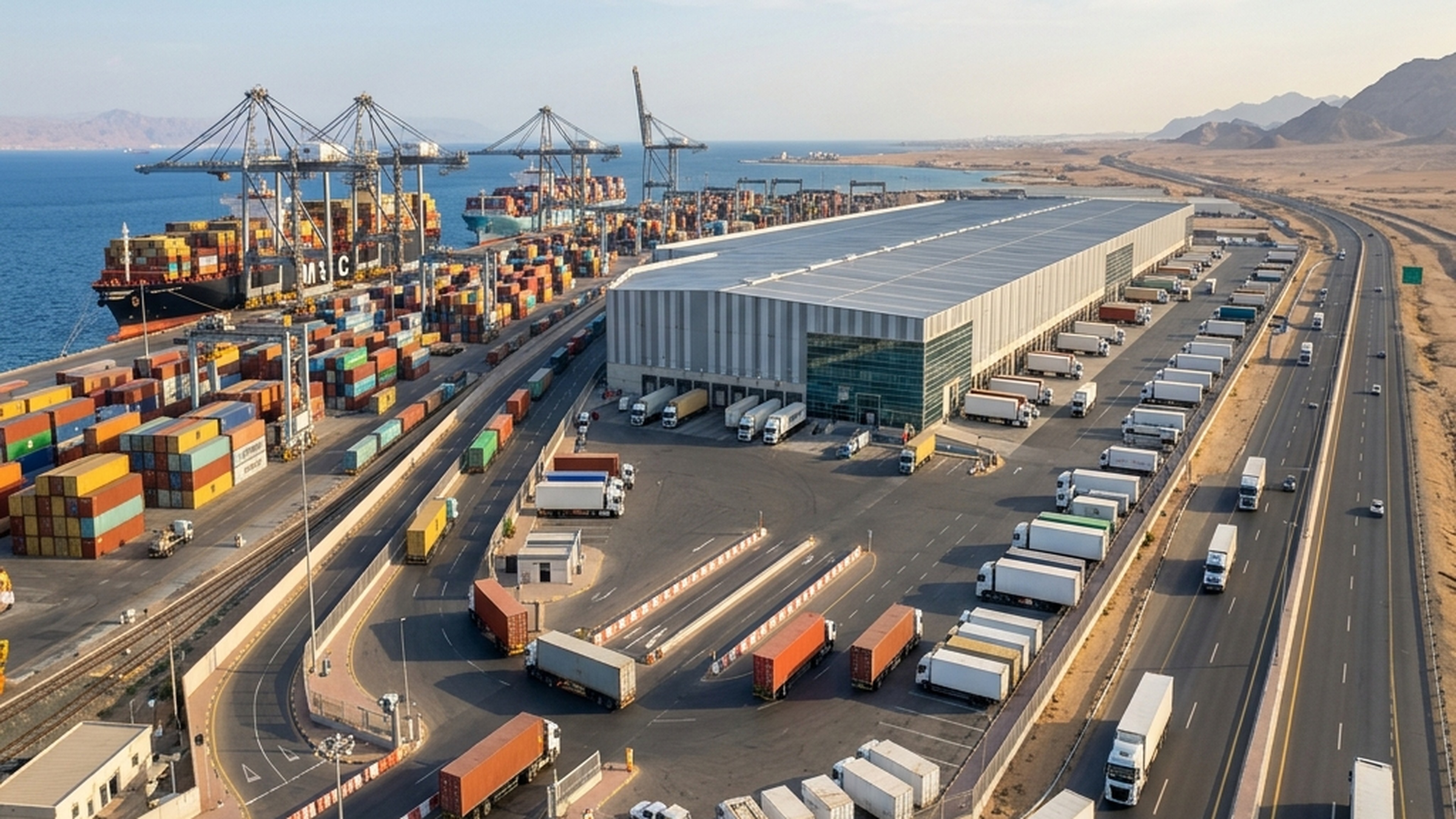
Most importers don't have a freight problem, a warehousing problem and a delivery problem. They have one supply chain problem broken into three vendors — and every hand-off between them is where cost, delay and finger-pointing live. As Saudi Arabia positions itself as a global logistics hub under Vision 2030, the businesses that win are the ones that treat the supply chain as a single chain, not a stack of separate contracts.
We're BAFCO International — 30 years running end-to-end logistics across Jeddah, Riyadh, Dammam and Jubail, with owned container terminals and warehousing. This guide explains what "supply chain solutions" really means in Saudi Arabia, the models and components, and how to choose the right partner.
Talk to BAFCO about your supply chain — one partner from origin to end customer.
What "supply chain solutions" actually means
A supply chain solution is the coordinated management of everything it takes to move a product from its origin to your end customer: sourcing and inbound freight, customs clearance, storage and inventory, order fulfilment, and last-mile delivery — plus the technology that gives you visibility over all of it. The word "solution" is the important part: it's not five services bought separately, it's one designed flow with a single owner accountable for the whole thing.
2PL, 3PL, 4PL, 5PL — what the labels mean
| Model | What they do | Use it when… |
|---|---|---|
| 2PL | A single asset service — e.g. a carrier or a warehouse | You just need one transport or storage leg |
| 3PL | Outsourced logistics — freight, warehousing, distribution, customs | You want operations run for you across the chain |
| 4PL | A lead logistics partner that *manages* your supply chain (and other providers) | You want one strategic point of control |
| 5PL | Manages entire supply-chain *networks*, often tech-led | Large, complex, multi-party e-commerce networks |
Most growing Saudi businesses need 3PL with a 4PL mindset — an operator who both *runs* the logistics and *coordinates* the whole flow. See our best 3PL companies in Saudi Arabia guide.
The end-to-end components
A real supply chain solution joins these links into one chain:
- Freight forwarding — ocean, air and land freight, inbound and outbound, with the mode chosen for cost vs speed on each lane.
- Customs clearance — SABER, HS classification, 15% VAT, ZATCA handled in-house so cargo doesn't stall at the border or the port.
- Warehousing & distribution — bonded and general storage, inventory management, cross-docking and order fulfilment, positioned near your ports and customers.
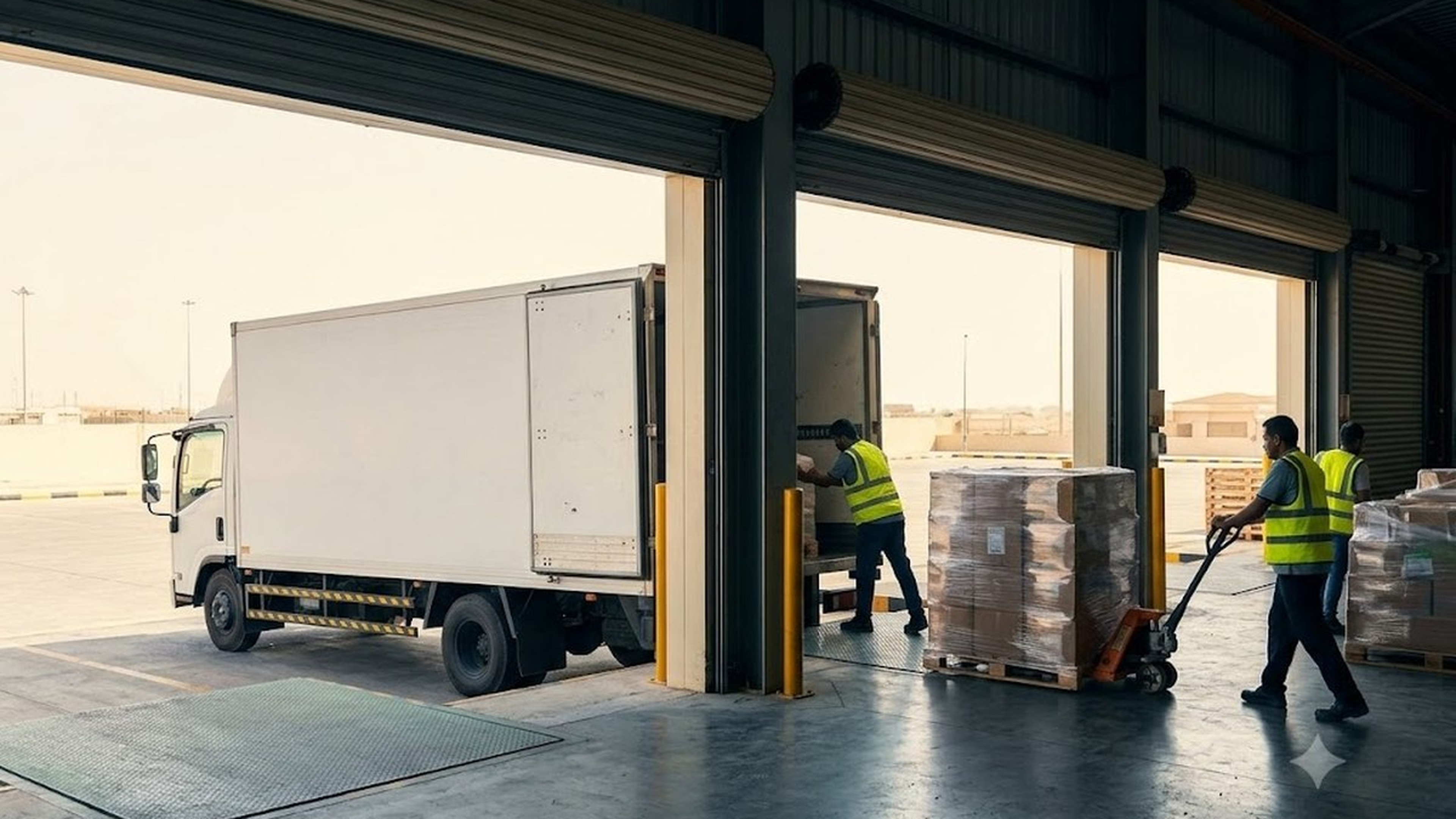
- Last-mile & transport — nationwide delivery from the shelf to the end customer's door.
- Technology & visibility — one system tracking cargo, inventory and orders across the chain (more below).
The value isn't in any one link — it's in removing the hand-offs *between* them.
Technology and visibility — the thread that ties it together
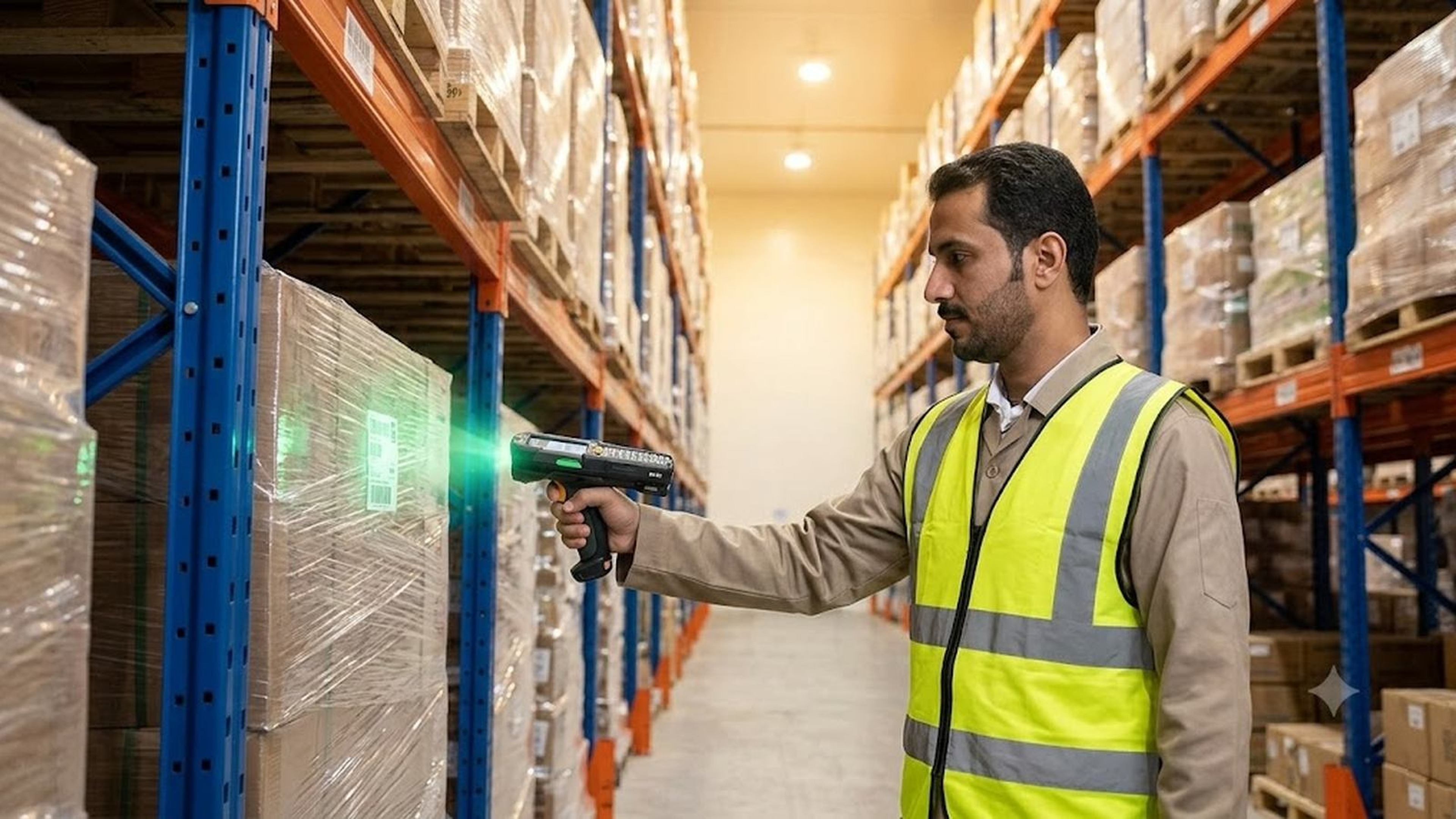
The difference between "logistics" and a "supply chain solution" is often the software. A modern operation runs a Warehouse Management System (WMS) for real-time stock accuracy, a Transport Management System (TMS) for planning and tracking deliveries, and shipment visibility that lets you see where cargo is between origin and door — ideally integrated with your ERP or e-commerce platform and aligned with ZATCA e-invoicing (Fatoora). If you can't *see* your inventory and shipments in one place, you can't control cost, service or working capital. Visibility isn't a nice-to-have; it's what turns a chain of services into a managed system.
Why integration beats a stack of vendors
When freight, customs, warehousing and delivery sit with separate companies, every boundary is a delay and a place to lose accountability. A container clears late, the warehouse wasn't told, the delivery slips — and each vendor blames the next. An integrated, asset-backed partner clears, stores and delivers on one chain, with one team accountable end to end. That's the difference between a supply chain that's a cost centre and one that's a competitive advantage — faster clearance, tighter stock control, fewer surprises.
Vision 2030 — why this matters now
Saudi Arabia is investing heavily to become a logistics bridge between three continents: new logistics zones, expanded port and rail capacity (including the Landbridge project), and a surge in e-commerce. That means more inventory flowing through Jeddah, Riyadh and Dammam — and a growing premium on supply chains that are fast, visible and compliant. Businesses that build the right logistics backbone now are positioned for that growth; those that don't inherit the bottlenecks as volumes rise.
Which industries need it most
- Retail & e-commerce — high SKU counts, fast fulfilment and returns; the fastest-growing driver of 3PL demand.
- Manufacturing & industrial — inbound raw materials and outbound distribution, often with project and machinery cargo.
- Energy, oil & gas — Eastern-Province supply chains with heavy and specialised cargo.
- Pharma, food & healthcare — temperature-controlled, compliance-heavy cold chains.
Each needs a slightly different blend of freight, storage and distribution — which is why a partner who covers all of them under one roof is valuable.
Build in-house or outsource?
Running your own logistics gives maximum control but ties up capital in warehouses, fleet, systems and staff — and rarely reaches the scale efficiencies of a specialist. Outsourcing to a capable 3PL/4PL converts those fixed costs to variable, taps existing infrastructure and expertise, and lets you scale up or down with demand. For most importers and manufacturers in Saudi Arabia, the pragmatic answer is to outsource execution to an asset-backed partner while keeping strategic control — the "3PL with a 4PL mindset" model.
Signs your supply chain needs fixing
Most businesses don't decide to overhaul logistics — they hit a wall and realise they should have sooner. The common warning signs: cargo regularly stuck at the port accruing demurrage; stock-outs and overstocks at the same time (poor visibility); delivery promises you can't reliably keep; finger-pointing between your freight, customs and delivery vendors when something slips; and no single report that tells you where your inventory and shipments actually are. Any two of these together usually means the problem isn't one vendor — it's the hand-offs between them.
What "good" looks like — the KPIs that matter
A well-run supply chain is measurable. The metrics worth watching: on-time-in-full (OTIF) delivery rate; order cycle time (order to delivery); inventory accuracy and stock turns; customs clearance time and demurrage incurred; and landed cost per unit. A capable partner reports these to you rather than leaving you to guess — visibility of the numbers is itself a sign the chain is being managed, not merely operated.
Getting started with a supply chain partner
Moving to an integrated partner is more straightforward than businesses fear. It usually runs: a discovery review of your current flows, volumes, lanes and pain points; a designed solution mapping freight, customs, storage and distribution to your needs; a phased onboarding (often starting with one lane or one warehouse to prove the model); systems integration so data flows between your platform and theirs; then steady-state operation with reporting. A good partner de-risks the switch by proving value on a slice before scaling to the whole chain.
One partner, or best-of-breed?
A fair question: why not pick the best freight company, the best warehouse and the best courier separately? Because "best at one link" rarely beats "accountable for the whole chain." The saving from a slightly cheaper individual service is usually swallowed by the delays and errors at the hand-offs between three providers who don't share systems or responsibility. An integrated, asset-backed partner trades a fraction of per-service optimisation for something worth far more: one team, one system, and one point of accountability from origin to end customer.
How to choose a supply chain partner
Look for a partner that is genuinely end-to-end (freight, customs, warehousing *and* distribution under one roof); asset-backed (owned terminals, warehousing and fleet mean control, not sub-contracting); has in-house customs (the most common point of failure, kept internal); offers nationwide reach across Jeddah, Riyadh and Dammam; provides real visibility and reporting; and has a long Saudi compliance track record, not a standing start.
Where an integrated supply chain saves money
The savings from joining the chain up are concrete, not abstract. Fewer demurrage and storage charges, because clearance is coordinated with the warehouse and delivery rather than happening in isolation. Lower inventory carrying cost, because visibility lets you hold the right stock instead of buffering against uncertainty. Better freight rates, because a partner consolidating your ocean, air and land volume buys at a scale you can't reach alone. Less waste from errors and re-work at vendor hand-offs that no longer exist. And lower administrative overhead, because one partner and one system replace three sets of contracts, invoices and contacts. Individually each is modest; together, across a year of shipments, they're the difference between logistics as a cost centre and logistics as an edge.
Why BAFCO for supply chain solutions in Saudi Arabia
BAFCO is the integrated model in practice: 30 years, owned container terminals and warehousing, in-house customs teams, and branches in Jeddah, Riyadh, Dammam and Jubail — freight, clearance, storage and delivery on one accountable chain. Compare us in our 10 best freight forwarders in Saudi Arabia guide.
Frequently asked questions
What are supply chain solutions in Saudi Arabia?
End-to-end management of the flow of goods — freight forwarding, customs clearance, warehousing and distribution, last-mile delivery, and the technology tying them together — typically hubbed in Jeddah, Riyadh and Dammam and delivered by a 3PL/4PL partner.
What is the difference between 3PL and 4PL?
A 3PL runs your logistics operations (freight, warehousing, distribution, customs). A 4PL manages your entire supply chain strategically, coordinating providers as a single point of control. Many Saudi businesses want a 3PL that also thinks and coordinates like a 4PL.
Why use one integrated partner instead of separate vendors?
Because every hand-off between separate freight, customs, warehousing and delivery vendors is a delay and a place to lose accountability. One integrated, asset-backed partner clears, stores and delivers on one chain with a single team responsible.
How does Vision 2030 affect supply chains in Saudi Arabia?
It's driving major investment in logistics zones, ports, rail and e-commerce, increasing inventory flows and raising the premium on fast, visible, compliant supply chains — a competitive edge for businesses that build the right backbone now.
What technology should a supply chain partner have?
At minimum a Warehouse Management System (WMS), a Transport Management System (TMS), and real-time shipment visibility that integrates with your ERP or e-commerce platform and aligns with ZATCA e-invoicing.
What should I look for in a supply chain partner in Saudi Arabia?
Genuinely end-to-end and asset-backed (owned terminals, warehousing, fleet), in-house customs, nationwide reach, real-time visibility, and a long Saudi compliance track record.