

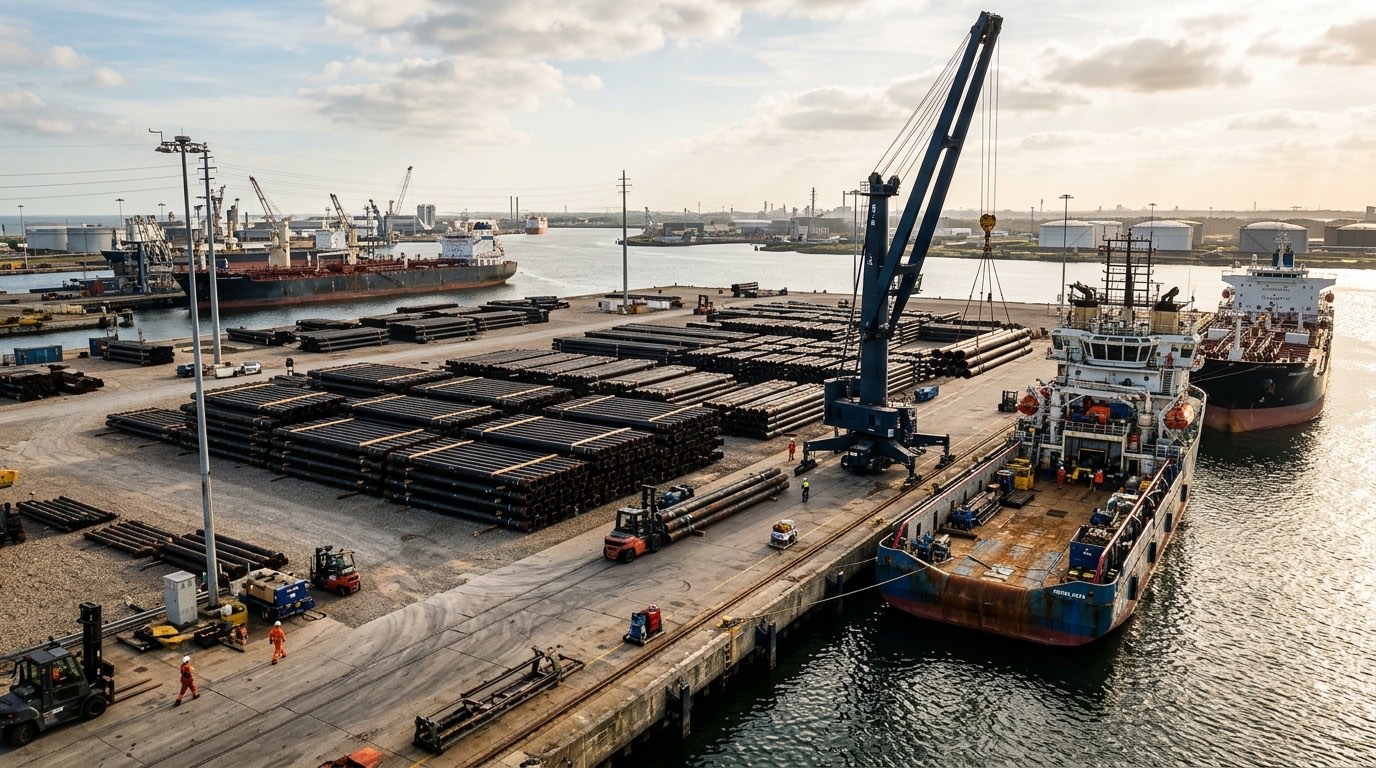
Saudi Arabia sits at the centre of the world's energy industry, and behind every barrel is a logistics operation most people never see: moving drilling equipment, pipe, pressure vessels, chemicals and urgent spares to rigs, refineries and petrochemical plants — often oversized, often hazardous, and almost always time-critical. Oil and gas logistics in Saudi Arabia is a specialised discipline where a delayed part can idle a rig costing a fortune per day, and where the wrong handling of a dangerous good is a safety and compliance failure, not just a delay.
We're BAFCO International — 30 years moving specialised and project cargo across Jeddah, Riyadh, Dammam and Jubail, with our own container terminals. This guide explains how energy-sector logistics works in the Kingdom.
Talk to BAFCO about your energy-sector cargo — project, spares and hazardous shipments handled properly.
What oil and gas logistics in Saudi Arabia involves
Energy logistics spans the whole value chain, and each stage moves different cargo:
- Upstream (exploration & production) — drilling equipment, wellheads, OCTG (oil country tubular goods — casing and pipe), rig spares, mud and chemicals.
- Midstream (transport & storage) — pipeline sections, valves, pumps, storage-tank components.
- Downstream (refining & petrochemicals) — reactors, heat exchangers, pressure vessels, catalysts, and the plastics, fertilisers and specialty chemicals the plants produce.
The common thread is that much of it is heavy, oversized, hazardous or urgent — sometimes all four — which is why energy logistics is handled differently from general freight.
The Eastern Province: the heart of Saudi energy logistics
Most oil and gas activity — and therefore most energy logistics — is concentrated in the Eastern Province. Dammam is the administrative and commercial hub of the Saudi oil industry, served by King Abdulaziz Port; nearby Al Khobar is a recognised energy-logistics centre; and Jubail (and the newer Ras Al-Khair industrial city) host the Kingdom's largest petrochemical and industrial complexes, with purpose-built industrial ports. For imported energy cargo, these Gulf gateways are usually the entry point, with onward movement to fields, plants and project sites across the region.
The cargo types — and why each is specialised
Project & heavy-lift cargo
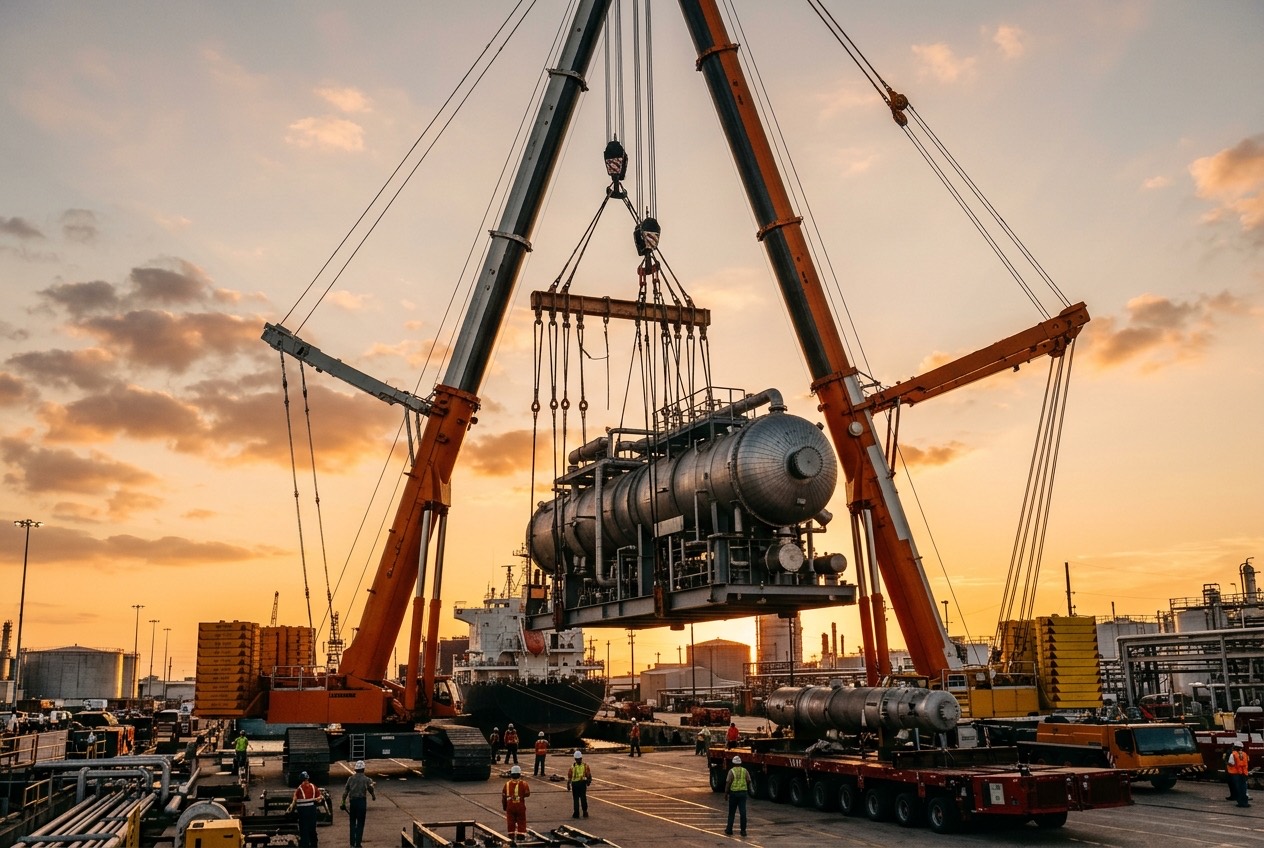
Refinery columns, reactors, transformers, modules and other oversized units move as project cargo — engineered lifts, route surveys, permits and heavy-lift vessels. This is where BAFCO's project cargo and break bulk capability directly serves the energy sector.
OCTG and pipe
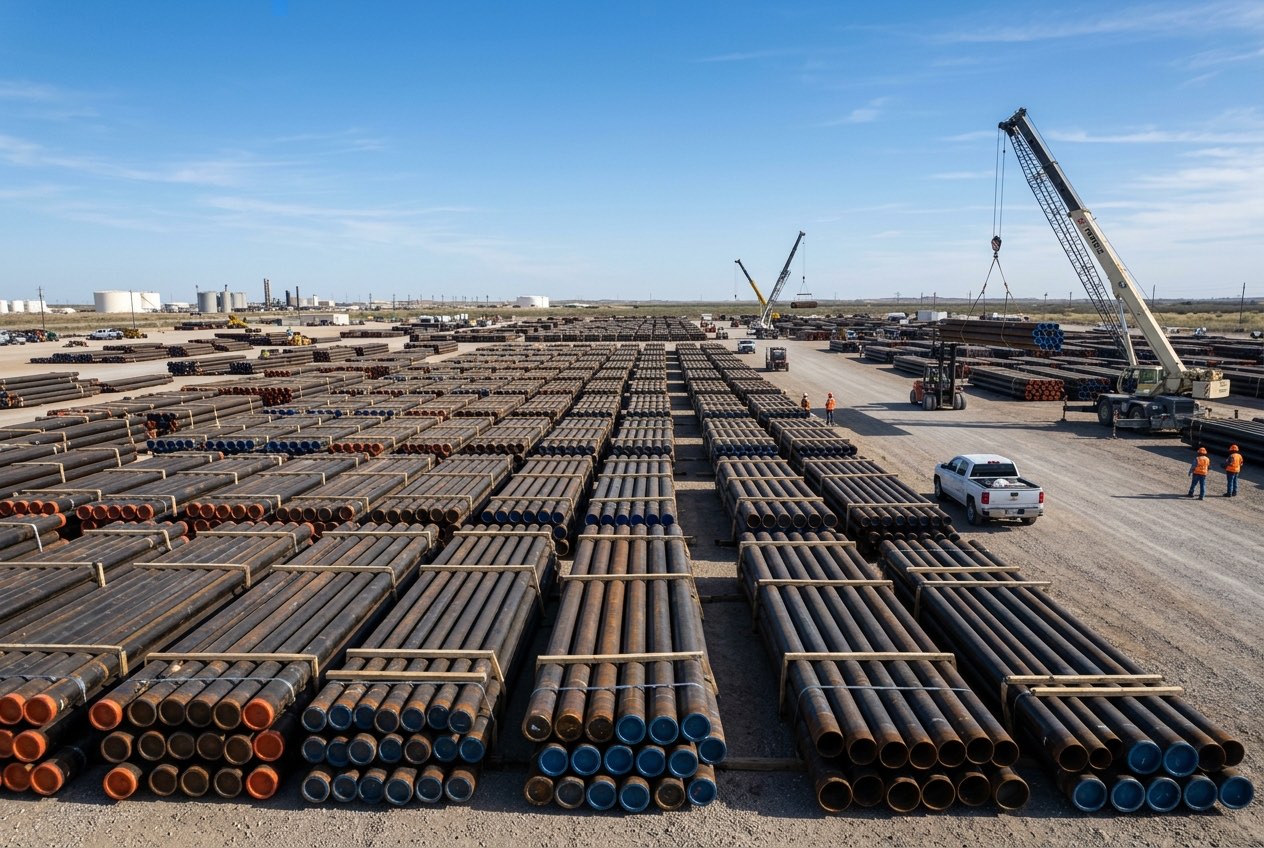
Casing, tubing and line pipe move in huge volumes, often as break-bulk or on flat-racks, needing careful handling and storage to avoid damage to threaded ends and coatings.
Urgent spares to rigs and plants
When a rig or plant is down, a single part becomes the most valuable cargo in the country. Time-critical spares move by air or expedited routing, because the freight cost is trivial against the cost of downtime.
Dangerous goods
Drilling chemicals, gases and reactive materials are dangerous goods, needing IMDG/IATA-compliant handling, correct classification and Saudi civil-defence approvals — see our dangerous goods shipping guide.
Time-critical logistics: the cost of downtime
Nothing defines energy logistics like the value of time. An offshore rig or a refinery unit out of action can cost enormous sums for every day it's idle, which completely changes the freight calculation: paying a premium to air-freight a spare or expedite a shipment is not extravagance, it's the cheapest option available. This is why energy shippers value a logistics partner who can switch to urgent mode instantly — arrange charter or express air, clear customs fast, and deliver to a remote site — rather than one geared only to routine freight.
Customs, compliance and warehousing for energy cargo
Energy imports face the same Saudi framework as any other — HS classification, SABER conformity where it applies, FASAH declarations, duty and VAT — but with added complexity from dangerous goods and high-value project pieces. Many energy operators also run spares and inventory hubs: warehousing near the Eastern-Province ports where critical parts are held ready, so a breakdown is met from local stock rather than a weeks-long import. Combining warehousing with fast customs and transport is what keeps an energy supply chain responsive.
Why oil and gas logistics in Saudi Arabia needs a specialist
General freight forwarders can move a pallet; energy logistics needs more. It demands project-cargo engineering, dangerous-goods expertise, the ability to expedite when downtime looms, heavy-load port and terminal capability, and a deep familiarity with the Eastern-Province energy corridor. Getting any of these wrong in this sector isn't a minor slip — it's rig downtime, a safety incident, or a stalled plant. That's why energy operators work with forwarders who specialise, not generalise.
The challenges unique to energy logistics
Energy cargo concentrates almost every logistics difficulty into one sector. Scale and weight — reactors, columns and modules that need heavy-lift vessels and engineered lifts. Hazard — chemicals and gases that are dangerous goods. Remoteness — sites far from ports, in the desert or offshore, reached only by careful onward transport. Time pressure — the ever-present cost of downtime. And compliance — customs, SASO, civil-defence and safety rules layered on top. A partner who handles general cargo well can still be overwhelmed by an energy shipment that combines four of these at once, which is why the sector rewards genuine specialisation over general capability.
Moving cargo to remote and offshore sites
Getting energy cargo to the port is only half the job; getting it to a rig, a wellsite or a remote plant is the other. That final leg can involve heavy-haul road transport under permit, coordination with site-access windows, and for offshore work, transfer to supply vessels. Planning this onward movement — not just the port arrival — is what separates a shipment that reaches site on schedule from one that clears customs and then stalls. It's the same route-survey discipline that defines project cargo, applied to the energy corridor.
Renewables: the new energy cargo
Energy logistics in Saudi Arabia is no longer only about oil and gas. Vision 2030's push into renewables — large-scale solar and wind, and the giga-projects building new energy infrastructure — generates its own flow of specialised cargo: wind-turbine blades and towers (among the most challenging oversized cargo there is), solar equipment, transformers and grid components. The skills are the same as traditional energy logistics — project engineering, heavy-lift, careful handling — applied to a fast-growing new source of demand, and a forwarder serving the sector today needs to handle both.
A spares and inventory strategy
For operators, the smartest energy logistics often happens before anything breaks. Holding critical spares in local inventory — in warehousing near the Eastern-Province ports — means a breakdown is met from stock in hours, not an emergency import over weeks. Building that spares hub, managing the inventory, and pairing it with fast expediting for the parts you don't stock is a core part of a mature energy supply chain. It turns logistics from a reactive scramble into a planned buffer against downtime, which on high-value energy assets pays for itself quickly.
Customs and the high-value cargo challenge
Energy imports raise the stakes on customs. High-value project pieces mean significant duty and VAT and a valuation that must be right; dangerous goods add classification and civil-defence layers; and urgent spares can't afford a clearance delay. This is where in-house customs, integrated with the freight, earns its keep — a stuck declaration on a rig-critical part is exactly the delay energy logistics exists to prevent. Handling the import and clearance under the same roof as the transport keeps high-value, time-sensitive cargo moving.
Working with a specialised energy forwarder
The practical takeaway for anyone moving energy cargo: the sector rewards a forwarder who has done it before. Look for demonstrable project-cargo and heavy-lift capability, dangerous-goods certification, Eastern-Province presence and port access, the ability to expedite urgent shipments, and in-house customs for high-value consignments. A generalist can move a routine pallet; energy logistics — oversized, hazardous, remote and time-critical — is where specialisation stops being a nice-to-have and becomes the difference between a rig running and a rig waiting.
Petrochemical exports: the outbound flow
Energy logistics isn't only inbound. Saudi Arabia's refineries and petrochemical complexes — concentrated in Jubail, Ras Al-Khair and the Eastern Province — are major exporters of plastics, polymers, fertilisers and specialty chemicals. That outbound flow is its own logistics operation: bagged and bulk chemicals, many of them dangerous goods, moving in containers, ISO tanks and break-bulk out of the Gulf ports to global markets. A forwarder serving the energy sector handles both directions — importing the equipment and chemicals that build and run the plants, and exporting the products they make — which is why petrochemical producers value a partner as fluent in dangerous-goods export as in project-cargo import.
Ports and gateways for energy cargo in the Eastern Province
The choice of port shapes the whole move. On the Gulf coast, King Abdulaziz Port in Dammam is the primary gateway for energy imports into the Eastern Province, with the heavy-lift and laydown capability that project pieces need. Jubail — commercial and industrial ports side by side — serves the petrochemical complexes directly, and the newer Ras Al-Khair industrial port handles the giga-scale mining and downstream cargo further north. For west-coast and Red Sea projects, Jeddah Islamic Port and King Abdullah Port are the entry points, with onward heavy-haul east. Matching the cargo to the right gateway — and lining up quay space, cranes and laydown before the vessel arrives — is a planning decision that a Saudi operator makes routinely and an offshore forwarder often gets wrong.
Documentation, permits and route surveys
Behind every energy shipment is a stack of paperwork that has to be right before the cargo moves. High-value project pieces need accurate HS classification and customs valuation; dangerous goods need correct classification, packing and civil-defence approvals; and oversized units need heavy-load road permits and, for the biggest lifts, a route survey and method statement confirming that every bridge, roundabout and overhead line on the way to site can take the load. None of this is optional, and none of it can be improvised at the port gate — a missing permit or a mis-declared dangerous good is exactly the stall that idles a rig or a project. Preparing the documentation up front, in-house and alongside the freight, is what keeps high-value, time-sensitive energy cargo moving.
Planning the timeline for oil and gas logistics in Saudi Arabia
Energy cargo runs on two very different clocks, and a good forwarder manages both. Project and heavy-lift moves are planned weeks or months ahead — engineering the lift, booking heavy-lift vessel space, arranging permits and route surveys, and sequencing arrival with the site's construction schedule. Urgent spares run on the opposite clock: hours matter, so the forwarder switches instantly to express or charter air, fast clearance and direct-to-site delivery. The discipline that ties them together is planning the timeline backwards from when the cargo is needed on site — not forwards from when it leaves the supplier — so nothing waits on a vessel sailing, a permit or a customs queue that could have been arranged earlier. That planning mindset is central to oil and gas logistics in Saudi Arabia, where a slipped date can mean a rig or a plant standing idle. The most experienced energy shippers also build in contingency — a little schedule buffer, pre-cleared documentation, and for the most critical items a pre-positioned spare or a nominated charter option — so that when something does slip, the response is already planned rather than improvised at the worst possible moment.
Why BAFCO for oil and gas logistics in Saudi Arabia
BAFCO brings exactly the mix energy cargo needs: project and heavy-lift capability, dangerous-goods handling, in-house customs, urgent-shipment expediting, and owned terminals — across the Eastern Province and the wider Kingdom, backed by 30 years. From an oversized reactor to a rig spare that can't wait, we handle it on one accountable chain. Compare us in our 10 best freight forwarders in Saudi Arabia guide.
Frequently asked questions
What is oil and gas logistics?
The specialised transport, handling and storage of energy-sector cargo — drilling equipment, OCTG and pipe, project and heavy-lift units, chemicals and urgent spares — to and from rigs, refineries and petrochemical plants, often involving oversized, hazardous or time-critical shipments.
Where is Saudi Arabia's energy logistics concentrated?
Mainly the Eastern Province — Dammam (King Abdulaziz Port) and Al Khobar as commercial and logistics hubs, and Jubail and Ras Al-Khair for petrochemical and industrial complexes — with these Gulf ports serving as the main gateways for imported energy cargo.
What makes energy-sector logistics different?
Much of the cargo is heavy, oversized, hazardous or urgent — sometimes all at once. It needs project-cargo engineering, dangerous-goods compliance, the ability to expedite against costly downtime, and heavy-load port capability, which general freight forwarding doesn't provide.
How are urgent rig spares shipped?
Usually by air or expedited routing, because the cost of downtime on a rig or plant far exceeds the freight premium. A specialised forwarder can arrange express or charter air, fast customs clearance, and delivery to remote sites.
Does energy cargo count as dangerous goods?
Often yes — drilling chemicals, gases and reactive materials are dangerous goods requiring IMDG/IATA-compliant classification, packing, documentation and Saudi civil-defence approvals.
Related reads
- Project Cargo in Saudi Arabia (2026)
- Dangerous Goods Shipping in Saudi Arabia (2026)
- Break Bulk Shipping in Saudi Arabia
- Warehousing & Distribution Services in Saudi Arabia
- Guide to Freight Forwarding Services in Saudi Arabia
Moving energy-sector cargo? Talk to BAFCO
Tell us what you're moving — project pieces, pipe, chemicals or urgent spares — and where it's going. We'll engineer the move, handle the compliance, and expedite when downtime is on the line, backed by 30 years and owned terminals in the Eastern Province. That's oil and gas logistics in Saudi Arabia handled on one accountable chain.
📞 +966 12 642 0333 · 📧 inquiry@bafcointl.com · 🛢️ Talk to BAFCO about energy cargo
📍 Jeddah HQ · Branches in Riyadh, Dammam & Jubail
