

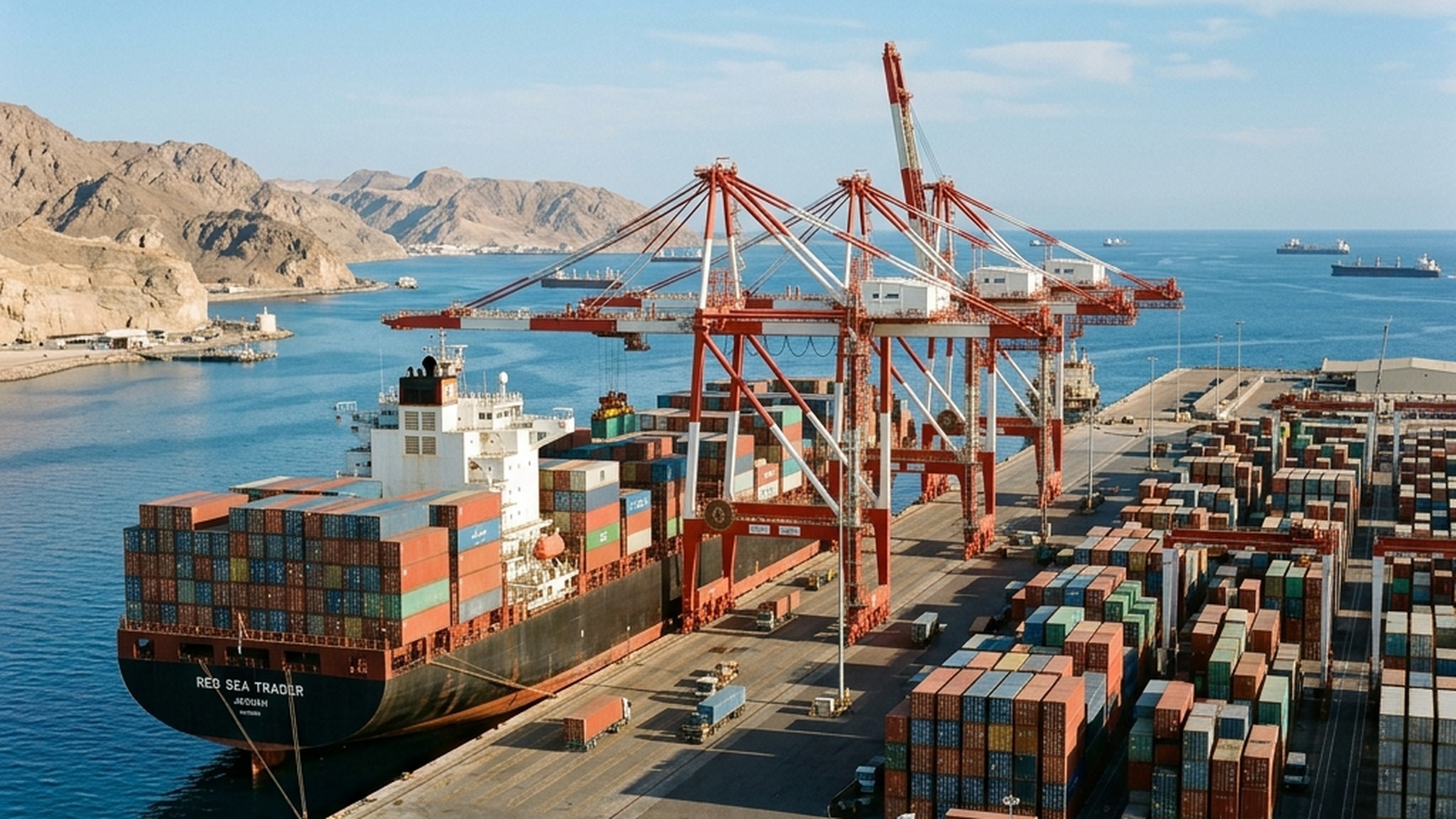
Around 90% of world trade moves by sea, and for Saudi importers and exporters ocean freight is still the backbone every other mode is measured against. Yet the decision most shippers get wrong isn't the carrier or the rate — it's FCL vs LCL. Pick wrong and you quietly add cost, days and damage risk to every shipment for a year.
We're BAFCO International — 30 years moving ocean freight through Saudi ports, with our own container terminals and branches in Jeddah, Riyadh, Dammam and Jubail. This guide covers sea freight from Saudi Arabia in 2026: the container options, what it costs, how long it takes, and how to choose between full-container and consolidated shipping.
Need it priced for your cargo? Request a sea freight quote from BAFCO — we'll map route, container type and charges to your actual volume.
What "sea freight from Saudi Arabia" covers
Saudi Arabia sits on two coastlines — the reason it's positioned as a trade bridge between Asia, Europe and Africa under Vision 2030. Your sea freight moves through one of four main gateways, each suited to a different trade:
- Jeddah Islamic Port (Red Sea) — the Kingdom's largest and busiest container port, handling the majority of national container traffic. The primary gateway for imports and exports to and from Asia, Europe and the Americas, and for onward distribution into western and central Saudi Arabia.
- King Abdullah Port (Rabigh, Red Sea) — a fast, highly automated private port north of Jeddah, increasingly used for container traffic and transhipment thanks to its deep berths and quick turnaround.
- King Abdulaziz Port, Dammam (Arabian Gulf) — the Eastern Province gateway, serving Gulf trade lanes and the industrial, oil and gas belt.
- Jubail Commercial Port (Gulf) — geared to the industrial and petrochemical sector.
Whichever gateway you use, cargo moves one of two ways: a full container (FCL) that's yours alone, or a shared container (LCL) consolidated with other shippers' goods. That single choice drives the cost, the transit time and the risk — so it's worth getting right.
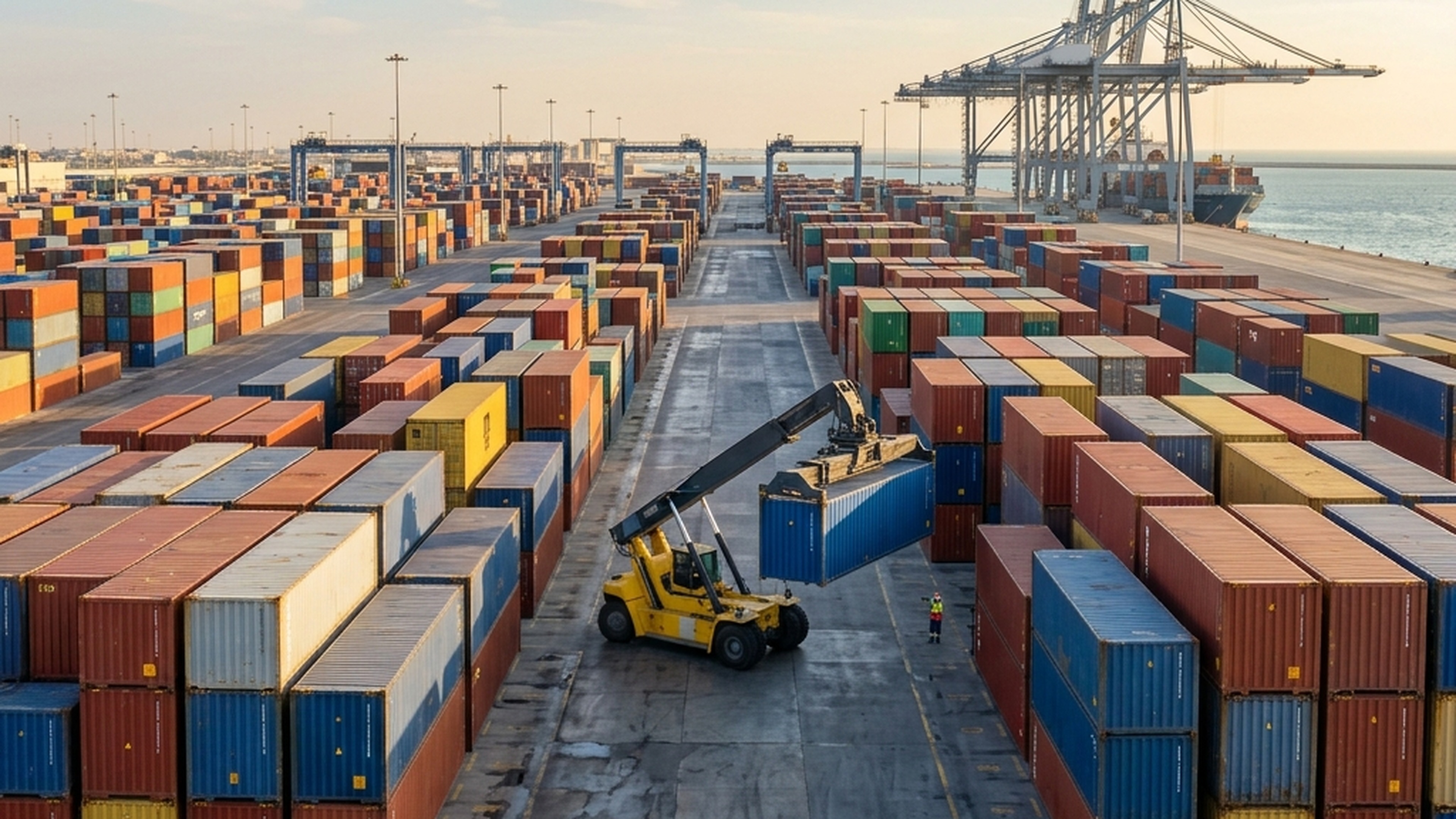
Container types you can ship
"A container" is really several very different boxes. Matching the right one to your cargo avoids paying for space you can't use — or discovering your cargo doesn't fit:
| Container | Usable capacity | Best for |
|---|---|---|
| 20ft standard | ~28–33 CBM, up to ~28 t payload | Dense, heavy cargo; smaller full loads |
| 40ft standard | ~58–67 CBM | General cargo; the workhorse box |
| 40ft High Cube | ~72–76 CBM | Voluminous, lighter cargo (extra height) |
| Reefer (refrigerated) | 20/40ft, temperature-controlled | Food, pharma, perishables (cold chain) |
| Flat-rack | Open sides/ends | Oversized, machinery, out-of-gauge |
| Open-top | Open roof | Tall cargo craned in from above |
| ISO tank | Liquid bulk | Chemicals, liquids, food-grade liquids |
For anything that won't fit a flat-rack or open-top, you're into break-bulk and project cargo territory — a different process entirely.
FCL vs LCL — the decision that sets your cost
FCL (Full Container Load) means you book an entire container at a flat rate, whether it's full or not. LCL (Less than Container Load) means you pay only for the space your cargo occupies — charged per cubic metre or per 1,000 kg, whichever is greater — sharing the container with other shippers.
| FCL — full container | LCL — shared container | |
|---|---|---|
| Best for | ~13–15 CBM or more | Small shipments (~2–13 CBM) |
| Priced by | Flat rate per container | Per CBM / per 1,000 kg |
| Transit | Faster — sealed and handled once | Slower — adds 7–10 days for (de)consolidation |
| Damage/risk | Lower — your cargo only | Higher — more handling, mixed cargo |
| Cost logic | Cheaper per unit once the box fills | Cheaper overall only for small volumes |
Rule of thumb: once cargo fills roughly half a container (about 13–15 CBM), a 20ft FCL usually costs about the same as the equivalent LCL — but ships faster and safer, so FCL wins. Below that, LCL is the economical choice. A good forwarder runs the maths both ways before booking, because the "obvious" cheaper option often isn't.
How LCL consolidation actually works
With LCL, your cargo is trucked to a Container Freight Station (CFS), where it's consolidated into a shared container with other shippers' goods bound for the same destination. At the destination port it's de-consolidated and separated for each consignee. That extra handling at both ends is exactly why LCL adds transit time and why cargo sees more touches (and slightly more risk) than a sealed FCL. It's a smart, economical option for small volumes — as long as you plan for the extra days.
What sea freight from Saudi Arabia costs (indicative 2026)
Ocean freight is a stack of charges, not one number. Indicative long-haul market rates in 2026:
- FCL: roughly USD 5,000–6,200 for a 20ft and USD 6,600–8,100 for a 40ft on major lanes — highly route- and season-dependent.
- LCL: often quoted from about USD 20 per CBM, plus handling and documentation.
A realistic FCL quote is built up like this: the base ocean rate for the box, plus BAF/CAF (bunker/fuel and currency adjustments), peak-season or general rate increases (GRI) when demand is high, terminal handling charges (THC) at both the origin and Saudi ports, documentation and Bill of Lading fees, then — on imports — customs duty (by HS code) and 15% VAT. The line item that catches importers out is demurrage and detention: demurrage starts when your container overstays at the port beyond the free days (often around 5–7), and detention when you hold the box outside the port too long. Slow customs clearance is where a "cheap" ocean rate quietly becomes expensive.
*(Rates indicative — ask BAFCO for a live quote.)* For how ocean fits your total landed cost, see our freight forwarding cost in Saudi Arabia guide.
Transit times from Saudi Arabia (typical, from Jeddah)
| Lane | Typical transit (port-to-port) |
|---|---|
| KSA → India (Nhava Sheva/Mundra) | ~7–12 days |
| KSA → China (Shanghai/Ningbo) | ~14–22 days |
| KSA → North Europe (Rotterdam/Hamburg) | ~10–18 days |
| KSA → US East Coast | ~22–32 days |
| KSA → US West Coast | ~28–38 days |
These are port-to-port ranges; direct services are faster than transhipment routings, and long-haul door-to-door commonly lands in the 25–35 day window once handling and clearance are counted. LCL adds ~7–10 days for consolidation. From Dammam, Gulf and Far East timings shift with routing. For your exact lane, use our sea freight transit time calculator.
Documents you'll need
Sea freight moves on paperwork as much as on water. The core set: commercial invoice, packing list, Bill of Lading, and Certificate of Origin — plus, for Saudi imports, SABER/SASO conformity and the correct HS classification. Missing or mismatched documents are the number-one cause of demurrage, so this is worth getting exactly right up front. The full checklist lives in our Saudi Arabia shipping documents guide, and the terms your supplier quotes (FOB, CIF, etc.) decide who is responsible for which leg — see our Incoterms guide for Saudi importers.
5 sea freight mistakes that cost Saudi importers
- Choosing LCL when the volume says FCL — paying per-CBM plus double handling when a 20ft box would have been cheaper and faster.
- Reading only the ocean rate — ignoring surcharges, THC, customs and demurrage, then being surprised by the final invoice.
- Underestimating clearance time — letting the container sit and accrue demurrage while paperwork catches up.
- The wrong Incoterm — accepting a CIF-to-port quote that leaves all the Saudi clearance and delivery cost on you.
- No onward-delivery plan — cargo lands, clears, then stalls at the port because no one arranged the trucking to Riyadh or Dammam.
Peak season, blank sailings and rate volatility
Ocean rates aren't fixed — they move with capacity and demand. Expect higher rates and general rate increases (GRI) around peak periods (traditionally the pre-holiday rush out of Asia), and watch for blank sailings — departures carriers cancel to manage capacity — which can bump your cargo to a later vessel and stretch transit. Booking earlier, staying flexible on sailing dates, and working with a forwarder who holds space with multiple carriers all cushion this volatility. It's another reason a single rock-bottom quote from one carrier can end up costing more than a slightly higher rate with reliable, confirmed space.
Sea or air? When to switch
Sea wins on cost for anything heavy, bulky or non-urgent. But when the cost of *waiting* — lost sales, stalled production, perishable stock — beats the freight saving, air is the smarter spend. We draw that line in our air freight cost in Saudi Arabia guide. Most importers use both: sea for the bulk, air for the urgent top-ups.
How to choose a sea freight partner in Saudi Arabia
Look for genuine FCL and LCL options with honest advice on which fits; carrier relationships and space in peak season; in-house customs clearance so the box doesn't rack up demurrage; owned terminals or port presence for fewer hand-offs (a BAFCO advantage); real visibility and proactive updates; and nationwide onward delivery from port to door across Jeddah, Riyadh and Dammam.
Why BAFCO for sea freight in Saudi Arabia
Ocean freight is where BAFCO started. Thirty years on, we combine carrier relationships, in-house customs teams, and our own container terminals with branches in Jeddah, Riyadh, Dammam and Jubail — so your cargo is booked, cleared, landed and delivered on one chain, FCL or LCL. Compare us against the field in our 10 best freight forwarders in Saudi Arabia guide, or send us your shipment profile directly.
Frequently asked questions
What is sea freight from Saudi Arabia?
The movement of goods by ocean container through the Kingdom's ports — mainly Jeddah Islamic Port on the Red Sea and King Abdulaziz Port in Dammam on the Gulf — as either a full container (FCL) or consolidated cargo sharing a container (LCL), to and from destinations worldwide.
What is the difference between FCL and LCL?
FCL books a whole container at a flat rate, best for ~13–15 CBM or more. LCL charges only for the space you use in a shared container, best for smaller loads. FCL is faster and lower-risk; LCL is cheaper for small volumes but adds handling time.
How much does sea freight from Saudi Arabia cost in 2026?
Indicatively, a 20ft FCL runs roughly USD 5,000–6,200 and a 40ft USD 6,600–8,100 on major lanes, while LCL is often quoted from about USD 20/CBM — before surcharges, terminal handling, customs and VAT. Rates move with route and season, so ask for a live quote.
How long does sea freight take from Saudi Arabia?
Typically 7–12 days to India, 14–22 to China, 10–18 to North Europe and 22–38 to the US port-to-port; long-haul door-to-door is often 25–35 days, and LCL adds about 7–10 days.
Which Saudi port should I ship through?
Jeddah Islamic Port for western KSA and Asia/Europe/Americas; King Abdullah Port as a fast Red Sea alternative; King Abdulaziz Port (Dammam) and Jubail for the Eastern Province, Gulf lanes and industrial cargo.
What are demurrage and detention?
Demurrage is charged when a container overstays at the port beyond its free days; detention when you hold it outside the port too long. Both are avoidable with fast customs clearance and prompt container return.