

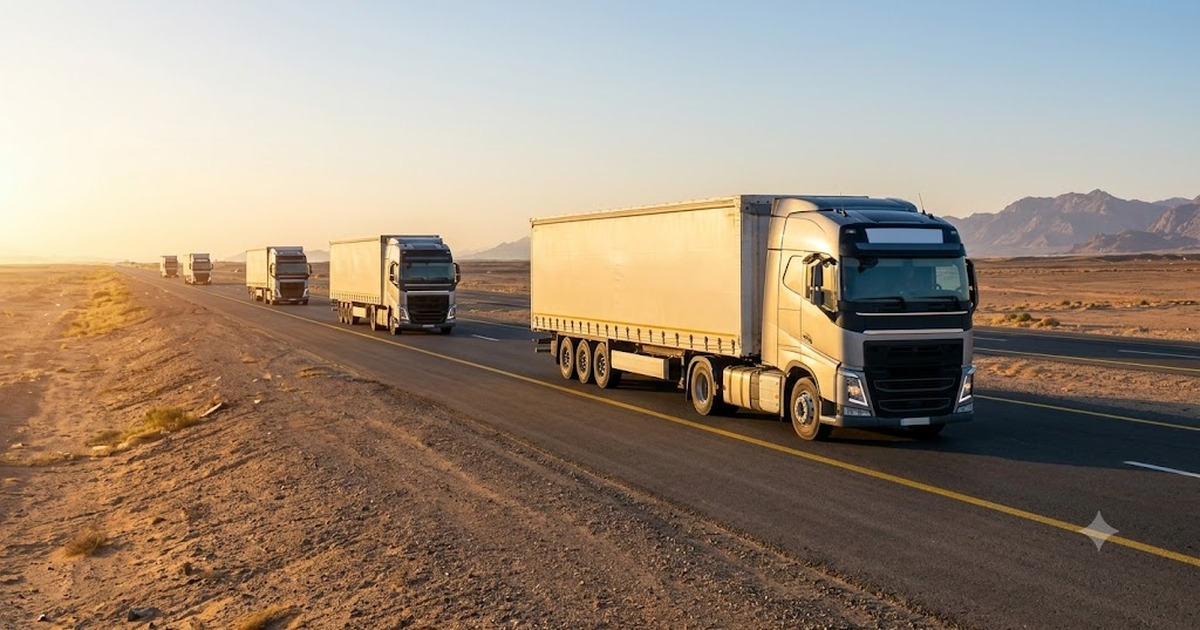
When cargo has to reach Dubai, Manama or Kuwait City, importers reach for sea or air out of habit — and often pay for it in transhipment delays or sky-high airfreight. For most GCC lanes, the smarter answer rolls on wheels. Saudi Arabia sits at the centre of the Gulf with 73,000+ km of road network and land borders into every neighbouring state, which makes road the fastest door-to-door option for a huge share of regional trade.
We're BAFCO International. We've run road and cross-border transport out of Jeddah, Riyadh and Dammam for 30 years, and this guide gives you the 6 powerful reasons to use land freight services in Saudi Arabia for GCC delivery in 2026 — with the transit times, distances, border crossings and fleet detail nobody else publishes.
Need a rate? Get a land freight quote from BAFCO for any domestic or GCC lane.
Why land freight is having a moment in Saudi Arabia
Land transport isn't the fallback option anymore — it's core infrastructure for a Kingdom aiming to be a top-10 global logistics hub. The Saudi trucking and road-freight market is forecast to grow from ≈ USD 8.61 billion in 2024 to USD 13.77 billion by 2031, and the Saudi Land-Bridge — a 1,500+ km rail project linking the Red Sea and the Gulf — is reshaping how cargo crosses the country. Add the 2026 GCC facilitation package (a 60-day storage-fee exemption on GCC imports/exports, and truck operating age raised to 22 years) and the case for road freight has never been stronger. Here's why it wins.
The 6 reasons to choose land freight for GCC delivery
1. True door-to-door delivery across the GCC — no transhipment
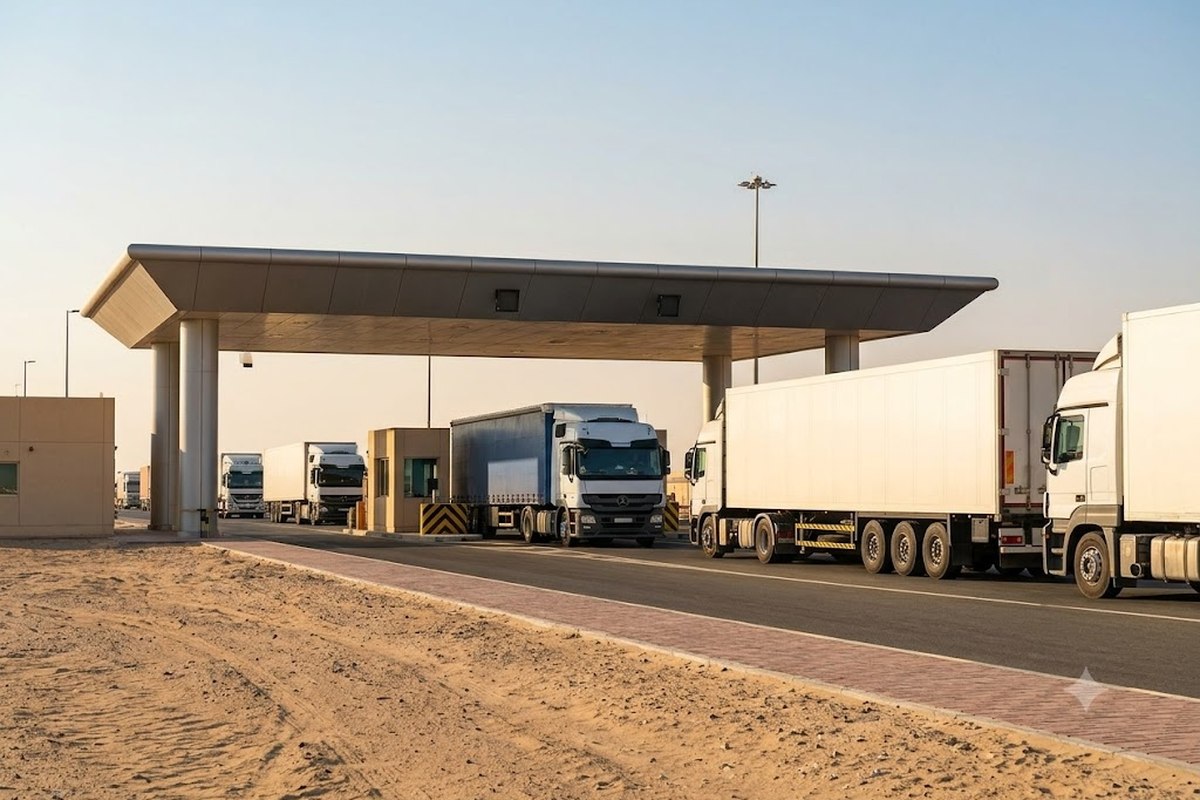
Land freight moves your cargo from your supplier's dock straight to your customer's door, across borders, without unloading onto a ship or plane in between. Saudi Arabia connects by road to every GCC neighbour through dedicated crossings:
| Crossing | Connects to | Notes |
|---|---|---|
| Al Batha (to Al Ghuwaifat) | UAE | Busiest Saudi–UAE land link; the main Gulf corridor |
| King Fahd Causeway | Bahrain | The only road link Saudi↔Bahrain (25 km causeway) |
| Salwa | Qatar | The sole Saudi–Qatar crossing |
| Al Khafji / Nuwaiseeb | Kuwait | Main Saudi–Kuwait corridor |
| Al Haditha | Jordan | Gateway to the Levant |
| Oman crossings | Oman | Direct to Muscat and the Batinah coast |
Fewer handling points means fewer things to break, delay or lose — the core door-to-door advantage.
2. Faster than sea, cheaper than air — the GCC sweet spot
For regional distances, road beats both alternatives on the metric that matters. Sea freight needs port-to-port transhipment and days of handling; air freight is fast but expensive for anything heavy or bulky. Land freight threads the needle:
| Land | Sea | Air | |
|---|---|---|---|
| Speed (intra-GCC) | 1–5 days, door-to-door | Slower (port + transhipment) | Fastest |
| Cost | Moderate | Lowest per kg (long haul) | Highest |
| Best for | Regional GCC lanes, door-to-door | Bulk, long-haul, non-urgent | Urgent, high-value, light |
| Handling | Minimal (one vehicle) | Multiple (port handling both ends) | Multiple (airport handling) |
For the full cost picture, see our 9 hidden costs of freight forwarding in Saudi Arabia. When cargo is time-sensitive but too heavy for economical air, road is almost always the answer — compare against our ocean freight and air freight services.
3. One customs clearance, the whole customs union
This is the GCC advantage most shippers underuse. Under the GCC Common External Tariff, most goods clear at a flat 5% — and once goods are cleared into one member state, they move within the customs union without further duty. Land freight lets you clear once and deliver across borders on the same truck. The land-border process (managed by ZATCA) needs the core documents:
- Commercial invoice
- Packing list
- Certificate of origin (key for the 0% GCC-origin rate)
- CMR / road waybill
- Any regulatory certificates for the cargo
- The edge: a forwarder who handles customs clearance at the border keeps your truck moving instead of parked at a crossing. Peak-time queues at busy borders like Al Batha can stretch from under an hour to several hours — experience and paperwork discipline are what get you through.
4. The right trailer for any cargo
"Land freight" isn't one truck — it's a fleet, and matching the trailer to the cargo is where an experienced operator earns its fee:
| Trailer type | Best for |
|---|---|
| Flatbed | General, palletised, steel, containers |
| Curtain-side / box (enclosed) | Weather-sensitive, secure general cargo |
| Reefer (refrigerated) | Pharma, food, perishables — multi-temp −25°C to +25°C with continuous monitoring |
| Lowbed / lowboy & step-deck | Heavy, tall or oversized machinery and project cargo |
Whether it's a full truckload (FTL) for a single large consignment or LTL (less-than-truckload) where you share space and cost for smaller volumes, the right configuration controls both price and safety. For oversized and heavy-lift moves by road, see our project cargo capability.
5. Complete national coverage — Jeddah, Riyadh, Dammam and beyond
Before cargo ever leaves the country, it usually has to cross it. Saudi Arabia is vast, and domestic land freight is a cost most port-only quotes ignore. Real distances and typical road transit:
| Domestic lane | Distance | Typical transit |
|---|---|---|
| Jeddah → Riyadh | ~950 km | ~1 day |
| Riyadh → Dammam | ~410 km | Same day |
| Jeddah → Dammam | ~1,350 km | 1–2 days |
With branches in Jeddah, Riyadh, Dammam and Jubail, BAFCO runs these lanes daily — connecting the Red Sea gateway (Jeddah), the capital and largest market (Riyadh), and the Eastern Province industrial hub (Dammam) — so your last mile isn't sub-contracted at a markup.
6. Real-time tracking and Vision 2030 momentum
Modern land freight comes with GPS tracking, 24/7 monitoring and proactive alerts, so you know where your cargo is at every crossing — not just when it arrives. And the macro tailwind is real: under the Vision 2030 National Transport & Logistics Strategy (≈ US$133 billion of planned investment), Saudi Arabia is building the road, rail and border infrastructure that makes land freight faster and more reliable every year. Choosing an operator plugged into that growth means your logistics scale with the Kingdom.
When to choose land freight — a quick decision guide
- Choose land for GCC cross-border delivery, door-to-door moves, time-sensitive-but-heavy cargo, and any domestic lane between the three hubs.
- Choose sea for bulk, long-haul intercontinental cargo where cost per kg beats speed.
- Choose air for urgent, high-value or light shipments where transit time is everything.
- Combine them — a multimodal forwarder can move cargo by sea to Jeddah, then by road to Riyadh or across to the UAE, on one coordinated chain.
Why BAFCO for land freight in Saudi Arabia
The reasons above are only as good as the operator behind them. BAFCO brings 30 years of Saudi and GCC road experience, a mixed fleet (flatbed, reefer, enclosed, lowbed), in-house customs clearance at the borders, branches in Jeddah, Riyadh, Dammam and Jubail, and true multimodal reach — so your cargo moves overland reliably and clears without drama. Compare us in our 10 best freight forwarders in Saudi Arabia guide, or read the full guide to freight forwarding services in Saudi Arabia.
Frequently asked questions
What are land freight services in Saudi Arabia?
Land freight services in Saudi Arabia move cargo by road (and rail) — domestically between hubs like Jeddah, Riyadh and Dammam, and across borders to GCC neighbours such as the UAE, Bahrain, Kuwait, Qatar, Oman and Jordan — using FTL or LTL trucking with trailers matched to the cargo.
How long does land freight take from Saudi Arabia to the UAE?
Cross-border road deliveries to GCC destinations typically take 2–5 days depending on the exact origin and destination and border clearance times. The main Saudi–UAE crossing is Al Batha (to Al Ghuwaifat). Filing customs paperwork correctly and in advance is the biggest factor in avoiding border delays.
Is land freight cheaper than air or sea in Saudi Arabia?
For regional GCC lanes, land freight is usually cheaper than air and faster door-to-door than sea (which needs port handling at both ends). Sea remains cheapest per kg for bulk long-haul cargo, and air is fastest for urgent, high-value or light shipments. Land is the sweet spot for time-sensitive regional freight.
What is the difference between FTL and LTL land freight?
FTL (full truckload) dedicates an entire truck to your consignment — best for large or urgent shipments. LTL (less-than-truckload) shares a truck across multiple customers, so you only pay for the space you use — best for smaller volumes where some extra transit time is acceptable.
Do I need separate customs clearance for each GCC country?
Under the GCC Common External Tariff, most goods clear at a flat 5%, and once cleared into one member state they generally move within the customs union without further duty — so a single clearance can cover onward GCC delivery. A forwarder handling clearance at the border keeps the truck moving.
Can land freight carry temperature-controlled or oversized cargo?
Yes. Reefer (refrigerated) trailers handle pharma, food and perishables with continuous temperature monitoring, and lowbed/step-deck trailers carry heavy, tall or oversized machinery and project cargo by road.
