

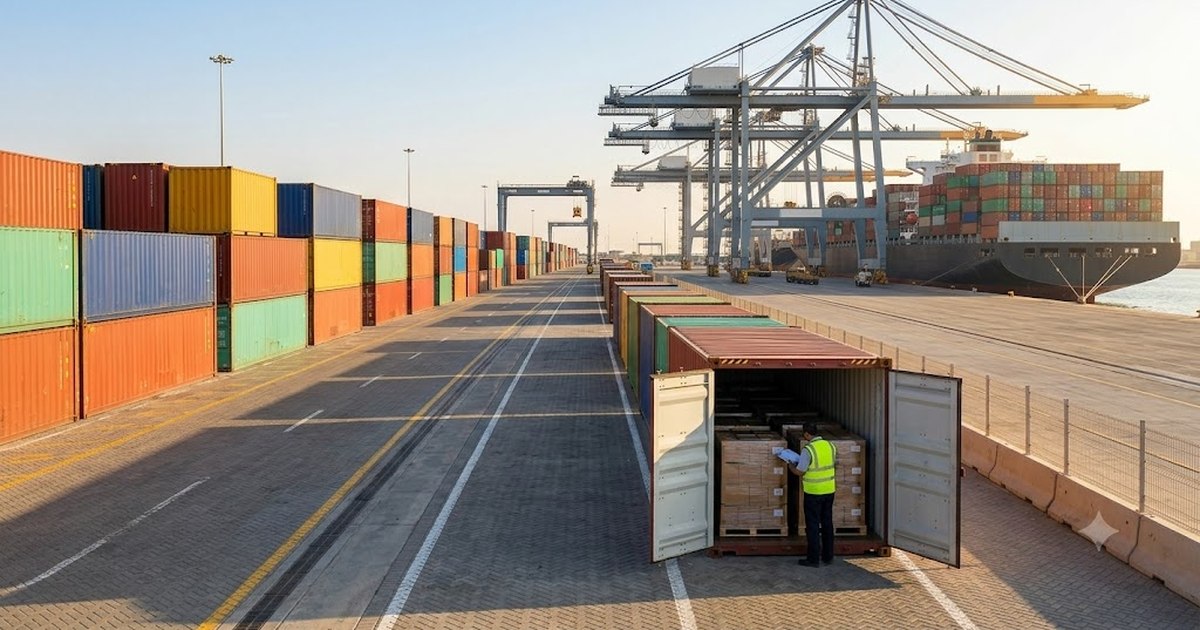
Most shipments that get stuck at a Saudi port aren't stopped by customs officers — they're stopped by paperwork the importer got wrong before the vessel ever sailed. A missing SABER certificate, a wrong HS code, a declaration filed late: any one of them turns a two-hour clearance into a five-day delay, and every one of those days is billed back to you as demurrage.
We're BAFCO International. We've cleared cargo through Jeddah Islamic Port, King Abdulaziz Port in Dammam, and Riyadh Dry Port for 30 years, and we've watched the same avoidable mistakes cost importers thousands. This guide lays out the 8 steps to fast customs clearance in Saudi Arabia in 2026 — the SABER, SASO, FASAH and ZATCA process, in order, with the numbers, the documents and the traps that slow everyone else down.
Want it handled end to end? Let BAFCO manage your customs clearance in Saudi Arabia — we file, pay and release so your cargo keeps moving.
What customs clearance in Saudi Arabia actually involves
Customs clearance is the process of getting imported goods legally released into Saudi Arabia — declaring them, proving they meet Saudi standards, paying duty and VAT, passing inspection, and collecting them before storage charges start. It runs through four systems you'll see throughout this guide:
- ZATCA — the Zakat, Tax and Customs Authority; assesses duty and VAT and runs customs.
- FASAH — the national single-window platform where declarations are filed.
- SABER — the online platform for product conformity certificates, operating under SASO (the Saudi Standards, Metrology and Quality Organization).
Saudi Arabia has streamlined this dramatically — a compliant, low-risk shipment can now clear in under two hours under ZATCA's fast-track initiative. But that speed is only available if the eight steps below are done right. Here's the sequence.

The 8 steps to fast customs clearance
Step 1 — Register and appoint your customs broker
Before anything moves, you need to be set up as an importer with ZATCA: a valid Commercial Registration (CR), an importer number, and — if you're using a licensed customs broker (almost everyone does) — a digital power of attorney granted through FASAH so the broker can act for you.
- Do it first: without this, your declaration can't be filed. A forwarder like BAFCO sets this up once so every future shipment is faster.
Step 2 — Sort product conformity: SABER and SASO
Most regulated products can't clear without a conformity certificate via the SABER platform under SASO. There are two you must not confuse:
- PCoC (Product Certificate of Conformity) — certifies the product model; valid for one year, covers multiple shipments.
- SCoC (Shipment Certificate of Conformity) — required for every individual shipment, even if you already hold a PCoC.
- The trap: importers get the PCoC and assume they're covered — then the shipment is held because no SCoC was issued. Arrange both before shipping. Since SABER is integrated with FASAH, a valid SCoC is auto-verified at clearance.
Step 3 — Classify your goods with the correct HS code
Every product is declared under a Harmonized System (HS) code that sets its duty rate. Saudi Arabia moved to a 12-digit tariff system (effective January 2025), so precision matters more than ever. You can verify a code through ZATCA's online customs tariff search.
- Why it's the #1 delay cause: a wrong or vague HS code triggers reclassification, inspection and duty disputes — the single most common reason shipments stall. Get it right once and clearance is smooth.
Step 4 — Prepare the required documents
Saudi customs has cut the document burden sharply (from around a dozen to as few as two for simple, pre-verified shipments), but a standard commercial import still needs:
- Commercial invoice (with accurate value and description)
- Bill of lading (sea) or air waybill (air)
- Certificate of origin — critical for duty: GCC-origin goods clear at 0% with a valid certificate
- Packing list
- SABER conformity certificate (from Step 2) for regulated goods
- The trap: mismatches between the invoice, packing list and declaration are a fast route to the Red channel. Keep them consistent. (See our full Saudi Arabia shipping documents checklist.)
Step 5 — File the customs declaration (Bayan) through FASAH
Your broker files the import declaration on the FASAH single window. File it at least 48 hours before the cargo arrives — pre-arrival filing is the biggest lever you have for fast release, because assessment and conformity checks can happen while the vessel is still at sea.
- Do it early: the goal is a declaration already assessed by the time the box lands, so it moves straight off the quay.
Step 6 — Pay customs duty and VAT
This is where the money lands. Two charges apply, and importers routinely under-budget the second:
- Customs duty — typically 5% under the GCC Common External Tariff, levied on the CIF value (goods + insurance + freight). It ranges from 0% (GCC-origin, plus many books, medicines and basic foods) up to higher protective rates, with excise items like tobacco at 100% and carbonated/energy drinks at 50–100%.
- VAT — 15%, charged on the landed value = CIF + customs duty (not just the goods).
Worked example — a SAR 100,000 CIF import (illustrative, not a quote):
| Line | How it's worked out | SAR |
|---|---|---|
| CIF value (goods + freight + insurance) | Supplier invoice + freight + insurance | 100,000 |
| Customs duty | 5% × CIF (standard rate) | 5,000 |
| VAT | 15% × (CIF + duty) = 15% × 105,000 | 15,750 |
| Total customs charges | duty + VAT | 20,750 |
Read that twice: duty + VAT add ≈ SAR 20,750 to a SAR 100,000 shipment — a 20%+ uplift before any port or trucking fee. Payment is made electronically (via SADAD) and, once settled, the release permit is issued. Budgeting for VAT on the *landed* value from day one is the single most common cost surprise we fix. For the full picture, see our 9 hidden costs of freight forwarding in Saudi Arabia.
Step 7 — Clear inspection: the Green, Yellow and Red channels
ZATCA risk-assesses every shipment into one of three lanes:
- 🟢 Green — auto-cleared, no inspection (trusted importers with clean, compliant declarations). Fastest — the sub-two-hour path.
- 🟡 Yellow — document review; officers check paperwork before release.
- 🔴 Red — physical inspection; the container is opened and examined, typically adding 2–5 days.
- How to earn Green: accurate declarations, correct HS codes, complete documents and a clean compliance history. Consistency over time moves you toward trusted-importer treatment.
Step 8 — Release, collect and deliver — before demurrage bites
Once duty/VAT are paid and inspection clears, ZATCA issues the release and you collect the cargo. This is the step where money quietly leaks. Saudi ports allow only limited free time; after it expires, demurrage (the box sitting at the terminal) and detention (you holding the carrier's container) accrue per container, per day. A few days' delay can dwarf any saving you made elsewhere.
- The fix: line up trucking and, if you can't release immediately, bonded warehousing — which lets you store goods under suspended duty and VAT until you're ready, instead of paying demurrage at the quay.
Prohibited and restricted goods — check before you ship
A clearance guide that skips this leaves you exposed. Some goods are prohibited outright; others are restricted and need prior approval from the relevant authority.
| Examples | |
|---|---|
| Prohibited (cannot be imported) | Weapons & ammunition, alcohol, narcotics, pork products, pornographic material, distillery equipment, used/retreaded tyres, counterfeit goods, and products of Israeli origin |
| Restricted (need prior approval) | Pharmaceuticals, chemicals, agricultural seeds, live animals, wireless/radio equipment, religious materials, and products containing alcohol (e.g. some perfumes) |
Always confirm against ZATCA's official prohibited and restricted goods lists before shipping — a prohibited item means seizure, penalties and re-export at your cost.
Port-by-port: where your cargo clears
Customs procedure is national, but the gateway matters for routing and speed:
- Jeddah Islamic Port (Jeddah) — the Kingdom's main Red Sea gateway and busiest container port; the default for western-region imports. See our freight forwarders in Jeddah.
- King Abdulaziz Port (Dammam) — the Eastern Province gateway, serving oil & gas, industrial and project cargo.
- Riyadh Dry Port — an inland customs clearance point, ideal for cargo destined for the central region without clearing at the coast.
- Airports — King Abdulaziz International (Jeddah) and King Khalid International (Riyadh) for air cargo.
Saudi Arabia operates 38+ active customs gateways across sea, air and land — a forwarder with teams at all three commercial hubs clears wherever your cargo lands.
What changed for 2026 — the updates that catch importers out
- 12-digit HS tariff system (from January 2025) — finer classification; re-check your codes.
- Palletization rule (from May 2025) — containerized imports must be palletized.
- MAWANI manifest rule (May 2026) — 6-digit HS codes and cargo volume required on manifests.
- ZATCA Phase-2 e-invoicing (Fatoora) — integrated electronic invoicing continues to roll out.
Staying current on these is exactly what an active, on-the-ground customs team does for you.
Why an experienced Saudi customs broker pays for itself
The delays above aren't bad luck — they're information gaps. A broker who clears cargo through Saudi customs every day gets the HS code right, files the Bayan pre-arrival, holds the SABER certificates, keeps you in the Green channel, and moves the box before demurrage starts. With 30 years in the Kingdom, in-house customs teams, owned container terminals and bonded warehousing across Jeddah, Riyadh and Dammam, BAFCO turns clearance from a risk into a routine. Compare us in our 10 best freight forwarders in Saudi Arabia guide.
Frequently asked questions
How long does customs clearance take in Saudi Arabia?
A compliant, low-risk shipment on the Green channel can clear in under two hours under ZATCA's fast-track initiative. Typical commercial clearance takes 1–3 business days; a Red-channel physical inspection adds roughly 2–5 days. Filing the declaration at least 48 hours before arrival is the biggest factor in speed.
How much is customs duty and VAT in Saudi Arabia?
Customs duty is typically 5% of the CIF value under the GCC Common External Tariff (0% for GCC-origin goods with a valid certificate of origin, higher for protected or excise goods). 15% VAT then applies to the landed value — CIF plus duty. On a SAR 100,000 CIF import at standard rates, that's about SAR 20,750 in combined duty and VAT.
What is the difference between SABER PCoC and SCoC?
The PCoC (Product Certificate of Conformity) certifies the product and is valid for one year across multiple shipments; the SCoC (Shipment Certificate of Conformity) is required for every individual shipment. You need both — holding a PCoC does not remove the need for an SCoC per shipment.
What is FASAH in Saudi customs clearance?
FASAH is Saudi Arabia's national single-window platform where the customs declaration (Bayan) is filed and where ZATCA, SABER/SASO and other agencies connect. Declarations should be filed at least 48 hours before cargo arrival.
What documents are needed for customs clearance in Saudi Arabia?
A standard import needs a commercial invoice, bill of lading or air waybill, certificate of origin, packing list, and a SABER conformity certificate for regulated goods — plus the customs declaration filed via FASAH.
What is the biggest cause of customs delays in Saudi Arabia?
Incorrect HS code classification, followed by missing or inconsistent documents (especially a missing SABER SCoC). Both push shipments into inspection channels and trigger demurrage. Getting classification and paperwork right before shipping is the fix.
Can I avoid demurrage while clearing customs?
Yes — file the declaration pre-arrival so goods release quickly, and use bonded warehousing to store cargo under suspended duty and VAT if you can't take delivery immediately, rather than letting containers accrue per-day charges at the port.
