

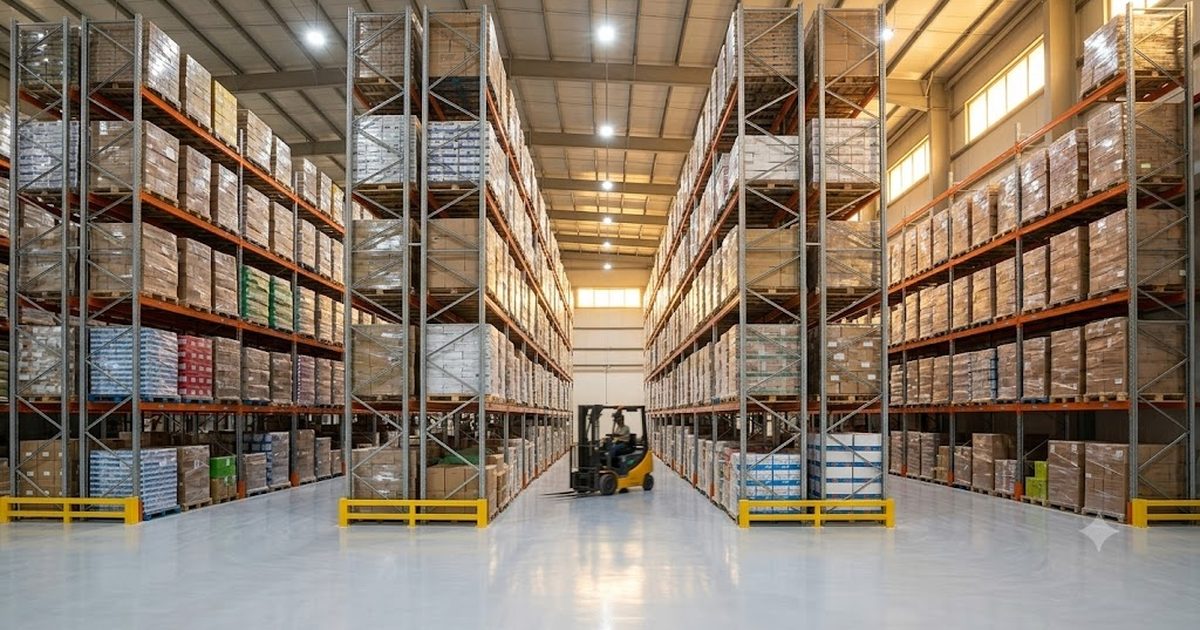
Picking a warehouse looks simple until your cargo is sitting on the quay and the "cheap" storage you signed up for can't take bonded goods, can't hold cold-chain stock, and can't deliver to Riyadh. In a market growing this fast — Saudi warehousing is projected to climb from USD 3.88 billion in 2025 to USD 5.20 billion by 2030 — the gap between a good warehousing partner and a cheap one shows up on your P&L, not the brochure.
We're BAFCO International. We've stored, handled and distributed cargo across Jeddah, Riyadh and Dammam for 30 years, backed by 100,000+ of storage capacity and our own container terminals. This guide walks through the 7 crucial things to check before choosing warehousing services in Saudi Arabia in 2026 — the questions that separate a partner who protects your margins from a landlord who just rents you space.
Need the short version? Request a warehousing quote from BAFCO and we'll map storage, handling and distribution to your actual cargo — before you commit.
Why warehousing is a strategic decision in Saudi Arabia (not just storage)
Under Vision 2030, Saudi Arabia is turning itself into a global logistics hub: 24 of 60 planned logistics centres are already active, over SAR 280 billion in transport and logistics contracts have been signed, and the Saudi Landbridge railway aims to compress Red-Sea-to-Gulf transit to under 48 hours. That means more inventory moving through Jeddah, Riyadh and Dammam — and warehousing that's wired into customs, technology and last-mile delivery, not just four walls and a roof.
Get the partner right and warehousing becomes a competitive advantage — faster clearance, lower duty exposure, tighter stock control. Get it wrong and you inherit demurrage, damaged goods and delivery delays. Here are the seven checks that decide which one you get.
The 7 things to check before you choose
1. Location and port / dry-port proximity
Where the warehouse sits decides how fast — and how cheaply — your cargo moves. The three hubs each serve a different purpose:
- Jeddah — the Red Sea gateway via Jeddah Islamic Port; warehousing is concentrated in the Al-Khomra district (dry, cold and open-yard). Best for imports entering western Saudi Arabia and onward national distribution.
- Riyadh — the capital and largest consumption market (the Central region holds ~42.5% of warehousing demand), served by Riyadh Dry Port with clusters in Al Sulay and Al Faisaliyah. Best for national distribution and inland fulfilment.
- Dammam — the Eastern Province gateway via King Abdulaziz Port; the hub for oil & gas, industrial and project cargo.
- Check: does the provider place your stock at the hub that matches your import port *and* your customers? A forwarder with branches in all three (like BAFCO) can position inventory where it lands and where it sells.
2. Bonded vs general warehousing — and whether they actually understand ZATCA
This is the check almost every buyer skips and every cheap competitor glosses over. A bonded warehouse lets you store imported goods under suspension of customs duty and VAT until the goods enter the local market or are re-exported — a direct cash-flow advantage. Saudi Arabia's Bonded Zones Rules (ZATCA Administrative Resolution No. 28918, effective 8 March 2024) formalised this, and ZATCA also offers a 30-day customs duty-deferral e-service (via bank guarantee or documentary obligation). Bonded is the fastest-growing warehouse type in the Kingdom at 7.72% CAGR — because importers are waking up to what it saves.
| General (public/private) warehousing | Bonded warehousing | |
|---|---|---|
| Customs duty & VAT | Paid on arrival, before storage | Suspended until goods leave for the local market (or waived if re-exported) |
| Best for | Duty-paid stock for immediate domestic sale | Imports you'll re-export, hold, or release in stages |
| Cash-flow impact | Duty + 15% VAT tied up on day one | Duty/VAT deferred — frees working capital |
| Re-export | Duty already paid | No duty if it never enters the local market |
- Check: can the provider offer bonded storage *and* explain, in specifics, how it maps to your import pattern? Vague "we do bonded" answers are a red flag. This is where warehousing meets customs clearance in Saudi Arabia — get both under one roof.
3. Storage conditions and cargo compatibility
"Warehouse" covers very different buildings. Confirm the provider can actually hold *your* cargo:
- Ambient / dry — general palletised goods.
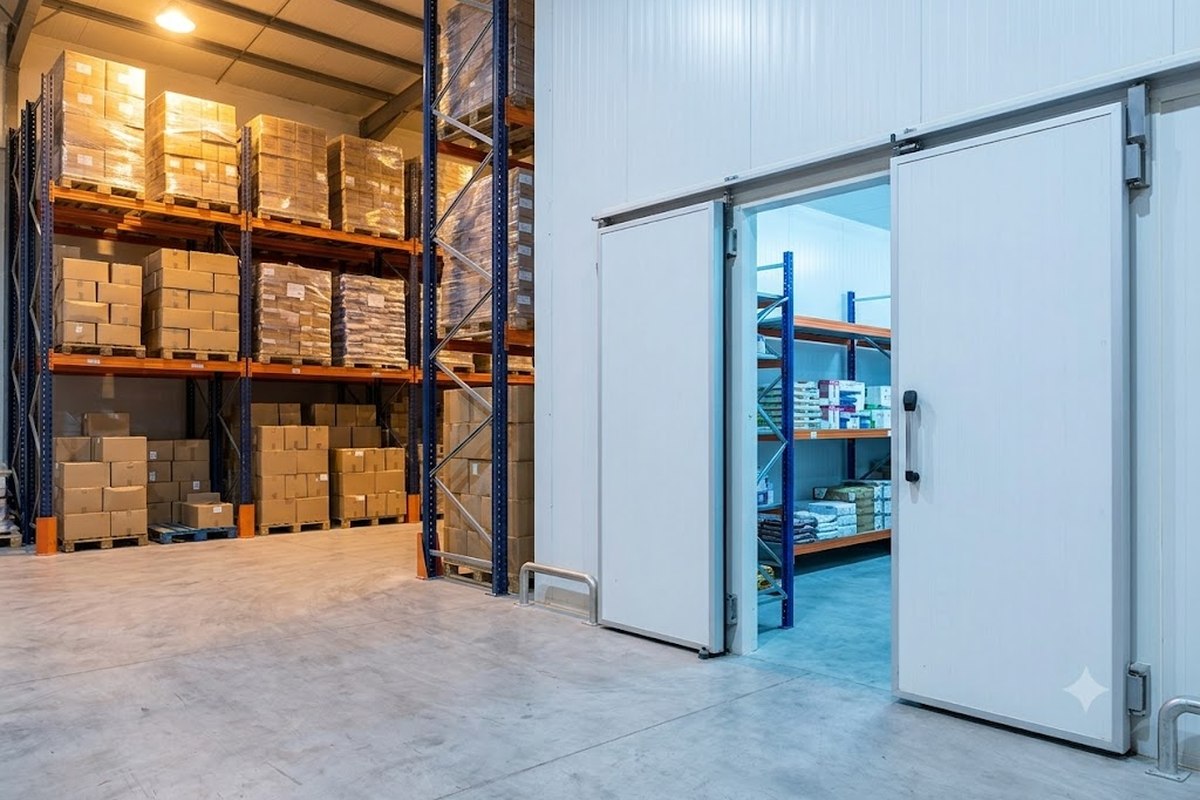
- Temperature-controlled / cold chain — pharma, food and healthcare (the fastest-growing segment at 8.85% CAGR), needing validated cold rooms and humidity control under SFDA standards.
- Hazardous / chemical — segregated, civil-defence-compliant storage.
- Project cargo, break-bulk and open-yard — oversized, heavy-lift or industrial equipment (a BAFCO strength — see our project cargo handling).
- Check: match the building to your product. A single provider covering multiple storage types means you don't split inventory across vendors.
4. Technology, WMS and real-time visibility
If you can't see your stock, you don't control it. A modern Warehouse Management System (WMS) should give you barcode/RFID scanning, live inventory accuracy, a client portal, and integration with your ERP or e-commerce platform — plus alignment with ZATCA e-invoicing (Fatoora). Value-added services are the fastest-growing warehousing revenue line (8.55% CAGR), and automation is scaling fast (fully-automated warehousing is growing 11.39% CAGR).
- Check: ask to see the client dashboard and the KPI reporting (stock accuracy, order cycle time, dispatch SLAs). "We'll email you a spreadsheet" is not visibility.
5. Distribution and last-mile integration
Storage that can't ship is a dead end. The real value is warehousing wired into onward delivery — cross-docking, order fulfilment, picking/packing and last-mile across the country. This is where a warehousing partner that's *also* a freight forwarder wins: your goods clear customs, land in the warehouse, and go out for delivery on one integrated chain.
- Check: can the provider deliver from the shelf to your customer's door — nationwide — or does it hand off to a third party at the warehouse gate? For recurring flow, this is the 3PL companies in Saudi Arabia model.
6. Cost structure — know what you're actually paying for
No competitor publishes pricing, which is exactly why importers get surprised. A transparent warehousing quote should break out:
- Storage — per pallet, per sqm, or per cubic metre, charged monthly (cold storage carries a premium over ambient).
- Inbound / outbound handling — receiving, put-away, picking, loading.
- In/out and cross-dock charges — movement fees.
- Value-added services — labelling, kitting, repacking, quality checks.
- Minimum terms and volume commitments.
- Check: insist on an itemised quote, not a single blended rate. And weigh bonded storage's duty-deferral saving (Check #2) against headline storage cost — the cheaper shelf can be the more expensive decision. See our freight forwarding cost in Saudi Arabia breakdown for how storage fits the full landed cost.
7. Compliance, insurance and Vision 2030 readiness
The unglamorous check that saves you when something goes wrong:
- Goods-in-storage insurance — confirm cover, limits and who's liable for damage or loss.
- Regulatory compliance — SASO/SFDA standards, civil-defence and fire-safety certification, ZATCA alignment.
- Scalability — can the provider grow with you as Saudi Arabia's logistics zones expand (the Industrial Development Fund has committed SAR 10 billion to 18 purpose-built logistics zones near Riyadh, Dammam and Jeddah)?
- Check: an asset-backed operator with owned facilities and 30 years of Saudi compliance history carries risk you'd otherwise carry yourself.
Bonded, general or cold — which warehousing do you need?
A quick way to translate the checks above into a decision:
| If your cargo is… | Choose | Why |
|---|---|---|
| Imported for re-export or staged release | Bonded | Duty/VAT suspended until goods enter the local market |
| Duty-paid, for immediate domestic sale | General | Simpler; no bond required |
| Pharma, food or healthcare | Temperature-controlled (SFDA) | Validated cold chain, humidity control |
| Oversized, heavy or industrial | Open-yard / project cargo | Built for break-bulk and heavy-lift |
| High-SKU e-commerce / retail | 3PL fulfilment + WMS | Picking, packing and last-mile at scale |
Most growing importers need a *blend* — which is the real argument for one asset-backed partner across all three cities rather than several single-service vendors.
Why BAFCO for warehousing in Saudi Arabia
The seven checks above aren't hurdles for a 30-year operator — they're the standard. BAFCO brings 100,000+ of warehousing capacity, owned container terminals, in-house customs teams, and branches in Jeddah, Riyadh, Dammam and Jubail, so your cargo is cleared, stored and delivered on one chain — bonded or general, ambient or cold, pallet or project cargo. Compare us against the field in our 10 best freight forwarders in Saudi Arabia guide, or talk to us about your storage profile directly.
Frequently asked questions
What are warehousing services in Saudi Arabia?
Warehousing services in Saudi Arabia cover the storage, handling, inventory management and distribution of goods — including bonded and general storage, temperature-controlled and hazardous storage, and value-added services like picking, packing and last-mile delivery, typically hubbed in Jeddah, Riyadh and Dammam.
What is the difference between bonded and general warehousing?
In a bonded warehouse, customs duty and 15% VAT are suspended until the goods enter the Saudi market (and waived if re-exported), which frees up working capital. In general warehousing, duty and VAT are paid on arrival. Bonded suits imports you'll re-export or release in stages; general suits duty-paid stock for immediate sale.
How much do warehousing services cost in Saudi Arabia?
Cost depends on storage type and volume. A transparent quote breaks out storage (per pallet/sqm/month), inbound and outbound handling, in/out and cross-dock charges, value-added services, and any minimum term. Cold storage carries a premium over ambient. Always ask for an itemised quote, not a single blended rate.
Which city is best for warehousing in Saudi Arabia?
It depends on your import port and customers. Jeddah (via Jeddah Islamic Port) suits western imports; Riyadh — the largest consumption market — suits national distribution via Riyadh Dry Port; Dammam (via King Abdulaziz Port) suits the Eastern Province, oil & gas and industrial cargo. Many importers use more than one hub.
Can a warehousing provider also handle customs clearance and delivery?
Yes — an integrated freight forwarder can clear customs, store the goods (bonded or general) and deliver last-mile on one chain, which avoids hand-offs, delays and finger-pointing between separate vendors.
Do I need temperature-controlled warehousing?
If you store pharma, food, healthcare or other perishable/sensitive goods, yes — you'll need SFDA-compliant, validated cold rooms with humidity control. It's the fastest-growing storage segment in the Kingdom.
